

Why Near Me Search Optimization Determines Who Wins Local Customers
Near me search optimization is the practice of making your business visible when nearby customers search for what you sell — on Google Maps, in the local pack, and in organic results.
Here’s how to do it, fast:
- Claim and complete your Google Business Profile — verify it, choose the right primary category, and keep your hours accurate.
- Keep your NAP consistent — your business name, address, and phone number should match everywhere online.
- Build location signals on your website — create service-area pages, add LocalBusiness schema markup, and embed a Google Map.
- Earn reviews and respond to them — review volume and quality directly influence local rankings.
- Optimize for mobile — most “near me” searches happen on a phone; slow pages lose customers instantly.
- Build local citations — list your business on major directories and industry-specific sites with identical NAP data.
That’s the core of it. The sections below go deeper on each step.
Forty-six percent of all Google searches carry local intent. And when someone searches “plumber near me” or “coffee shop near me,” they aren’t browsing — they’re about to make a decision. Google reports that 76% of people who run a local search on their phone visit a business within 24 hours. These aren’t casual clicks. They’re customers with their wallets open, looking for the closest credible option.
The businesses that show up aren’t always the biggest or the oldest. They’re the ones that have sent Google the right signals — a complete profile, consistent information, genuine reviews, and location-relevant content. The ones that don’t show up are often good businesses that simply haven’t told Google enough.
That’s the gap this guide closes.
I’m Nicholas Cunha, founder of CreatiVertical, and I’ve spent more than twenty years helping businesses — from Kansas City small businesses to offshore professional-services firms in the British Virgin Islands — improve their near me search optimization and turn local search visibility into real revenue. The strategies in this guide come from that hands-on work, not from theory.
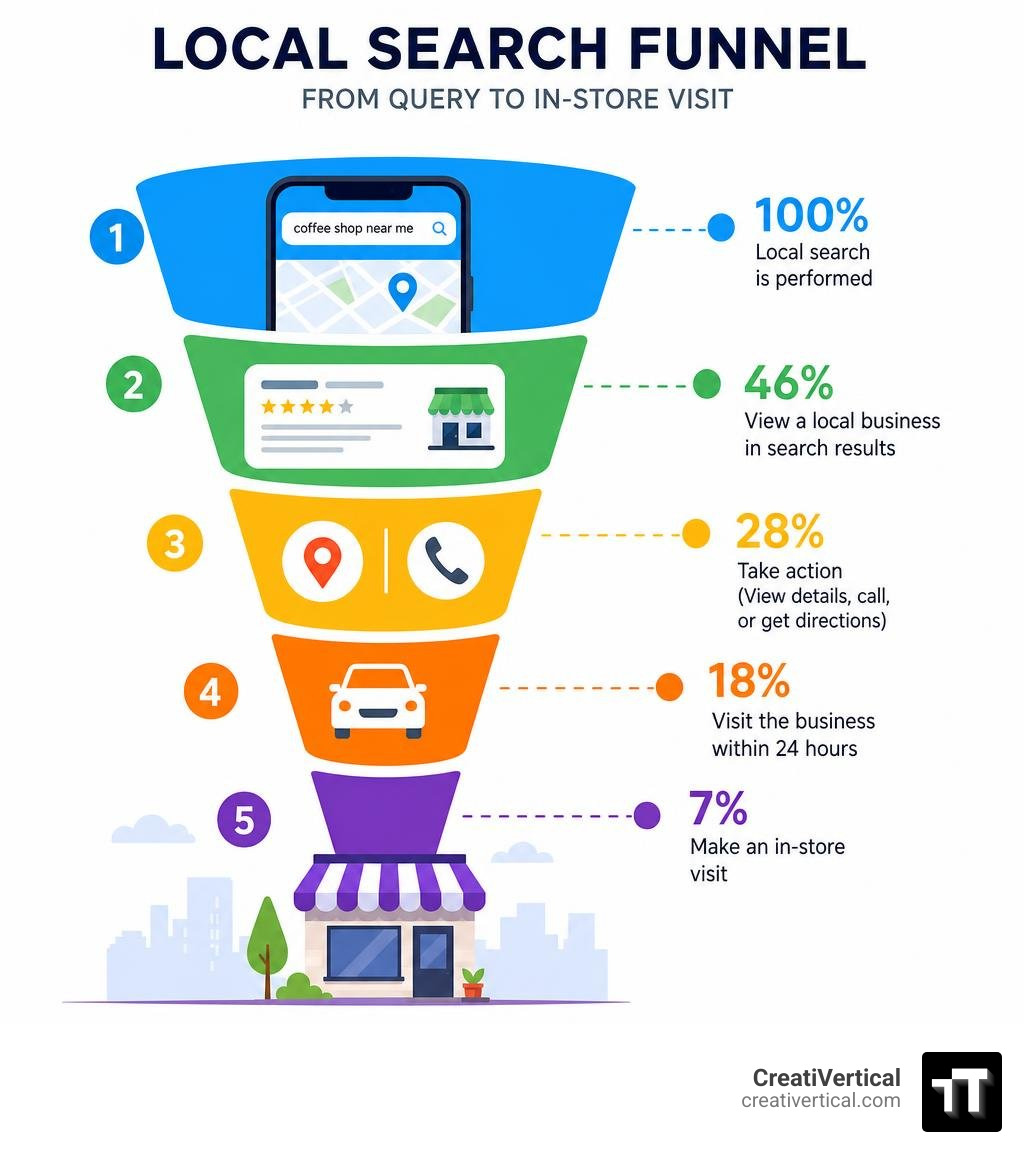
Easy near me search optimization glossary:
The Mechanics of Local Intent: How Google Decodes “Near Me” Queries
To understand how to rank for these high-intent queries, we have to look under the hood of Google’s local algorithm. When a user types a query containing “near me” or “nearby,” Google does not search for those literal words on a webpage. Instead, it treats “near me” as a dynamic proximity signal.
The algorithm replaces “near me” with the searcher’s precise geographic coordinates in real-time. Google calculates these coordinates using various device signals, including GPS data (on mobile), Wi-Fi connections, and IP addresses (on desktop).
According to official algorithmic documentation, Google evaluates local search results based on three core pillars:
- Relevance: How closely your business details match the user’s search query. If you are an electrical contractor, but your profile lacks specific mentions of residential panel upgrades, you may miss out on “panel replacement near me” searches.
- Distance: How close your physical business location (or defined service area) is to the searcher’s coordinates. This is the hardest factor to control, but it is heavily weighed.
- Prominence: How well-known or authoritative your business is online. This is calculated using your organic search rankings, the volume and sentiment of your reviews, local citations, and backlinks.
It is also important to distinguish between explicit and implicit local intent. An explicit query is when a user actively types “commercial lawyer in Kansas City” or “machined parts near me.” An implicit query occurs when someone simply searches for “emergency plumber” or “IT support.”
Google understands that certain service categories are inherently local. It automatically applies its local algorithm to these implicit searches, serving up a map pack even if the user never specified a location. To dive deeper into how these algorithms parse user intent, you can read the comprehensive breakdown in the “Near Me” SEO: Optimize for Local Searches That Convert guide.
Google Business Profile: The Core of Near Me Search Optimization
Your Google Business Profile (GBP) is the absolute foundation of your local search presence. Think of it as your digital storefront. If your website is your rocket, your GBP is the launchpad. Without a fully optimized and verified profile, you will remain virtually invisible in the Google Maps 3-Pack, which commands a massive share of local click-through rates.
A complete profile is non-negotiable. Google’s data shows that completed profiles are significantly more likely to earn customer trust and secure direct website visits.
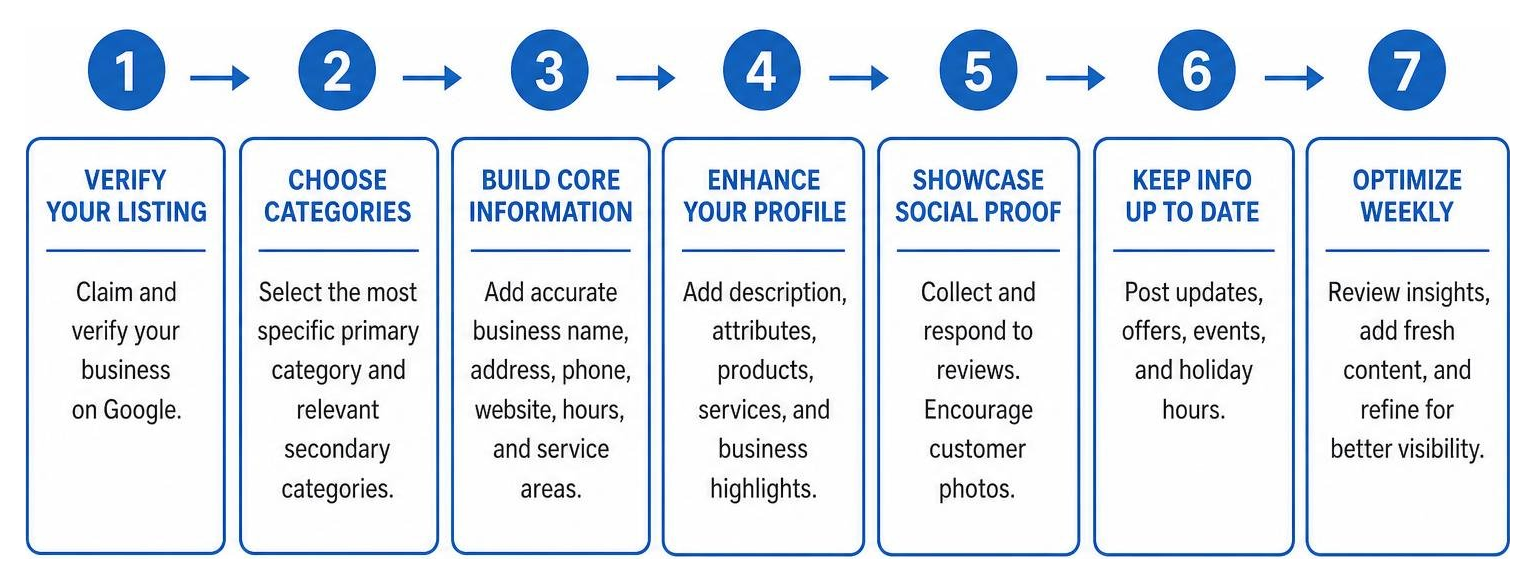
To optimize your GBP for maximum local visibility, follow this structured hierarchy:
- Claim and Verify Your Listing: If you haven’t claimed your business, do it immediately. Google requires verification via phone, email, or video to confirm your physical presence.
- Select Categories with Precision: Your primary category carries the most weight in Google’s ranking system. Choose the most specific category that matches your core business (e.g., “Patent Attorney” instead of just “Attorney”). Then, add relevant secondary categories to capture broader searches.
- Maintain Strict NAP Consistency: Your Name, Address, and Phone number (NAP) must be identical to what is listed on your website and across the web. Even minor discrepancies — like writing “Suite 100” on your website and “Ste 100” on your GBP — can dilute Google’s confidence in your data.
- Keep Business Hours Accurate: Update your hours regularly, especially for holidays. Google highlights “open now” businesses for late-night or urgent searches, and showing up with incorrect hours leads to negative reviews.
- Publish Google Posts Weekly: Use Google Posts to share updates, offers, and events. Regular activity signals to Google that your business is active and engaged.
For a detailed walkthrough on setting up your local assets correctly, refer to our Step-by-Step Guide to Local Visibility Online.
On-Page Tactics: Building Hyperlocal Relevance Without Spammy Keywords
A common mistake business owners make is stuffing the phrase “near me” into their website’s headers, paragraphs, and meta tags. Writing “We are the best industrial battery distributor near me in Kansas City” looks incredibly spammy to human readers, and modern search engines are smart enough to ignore it.
Instead, build genuine service-geography alignment. This means structuring your website to reflect the real-world areas you serve. If your business operates across multiple municipalities in Missouri — such as Kansas City and Lake Tapawingo — you should build dedicated location pages.
Each location page must feature unique, high-quality content. Do not just swap out the city names on duplicate pages. Write about local landmarks, mention regional regulations, embed a customized Google Map, and include local client testimonials. This signals authentic local relevance to search crawlers.
Additionally, you must implement structured data, specifically JSON-LD LocalBusiness schema. This code acts as a direct translator for search engines, explicitly stating your exact coordinates, operating hours, accepted payment types, and service areas.
| Optimization Element | “Near Me” Keyword Stuffing (Outdated) | Hyperlocal “Near You” Strategy (Modern) | |
|---|---|---|---|
| Header Phrasing | “Find a precision machining shop near me” | “Precision Machining Services Near You” | |
| Content Focus | Repeating “near me” in every paragraph | Referencing local landmarks, highways, and counties | |
| Title Tags | “Plumber Near Me – Kansas City, MO” | “Emergency Plumbing in Kansas City | 24/7 Service” |
| Schema Markup | Missing or basic generic markup | Advanced LocalBusiness JSON-LD with geo-coordinates |
To understand how retailers and local service providers structure their sites to capture this traffic naturally, you can read the retail-focused strategies in the How To Rank in Google ’Near Me’ Search Results (2026) – Shopify guide.
Modern On-Page Signals for Near Me Search Optimization
To rank organically for local queries, your on-page copy needs to speak the language of your community. Write naturally. Use phrases like “serving the greater Kansas City metro” or “conveniently located just off Interstate 70 in Lake Tapawingo.”
Your title tags and meta descriptions should clearly state your primary service, your location, and a compelling call to action. For example:
- Title Tag: Industrial Lubricant Distributor | Kansas City, MO | CreatiVertical
- Meta Description: Looking for a reliable industrial lubricant distributor in Kansas City? We provide rapid delivery of high-performance lubricants to manufacturers across Missouri.
First-party customer testimonials are another incredibly powerful on-page tool. When a customer writes, “They arrived at my home in Lake Tapawingo within an hour,” they are naturally injecting location-specific keywords and proximity signals onto your page.
To learn how to weave these elements together into a cohesive, high-performing website strategy, read our guide on No More Hide and Seek: A No-Nonsense Local Business SEO Strategy.
Citations, Reviews, and Backlinks: Establishing Prominence
Once your GBP and on-page content are optimized, you must build prominence. Prominence tells Google that your business is highly regarded, trustworthy, and authoritative within your geographic area.
First, clean up and expand your local citations. A citation is any online mention of your business name, address, and phone number. Start with major directories like Yelp, Bing Places, and Apple Maps, then target industry-specific directories. Ensure your NAP data is perfectly consistent across all of them. If you need a starting point, check out the top listings on the Best SEO Companies for Small Business in Missouri 2026 | Semrush directory to see how top-tier local entities manage their digital footprints.
Second, implement a proactive review generation system. Reviews are a massive ranking factor for local search. Google looks at three key review metrics:
- Volume: The total number of reviews.
- Sentiment: Your overall star rating.
- Velocity: How frequently you receive new reviews.
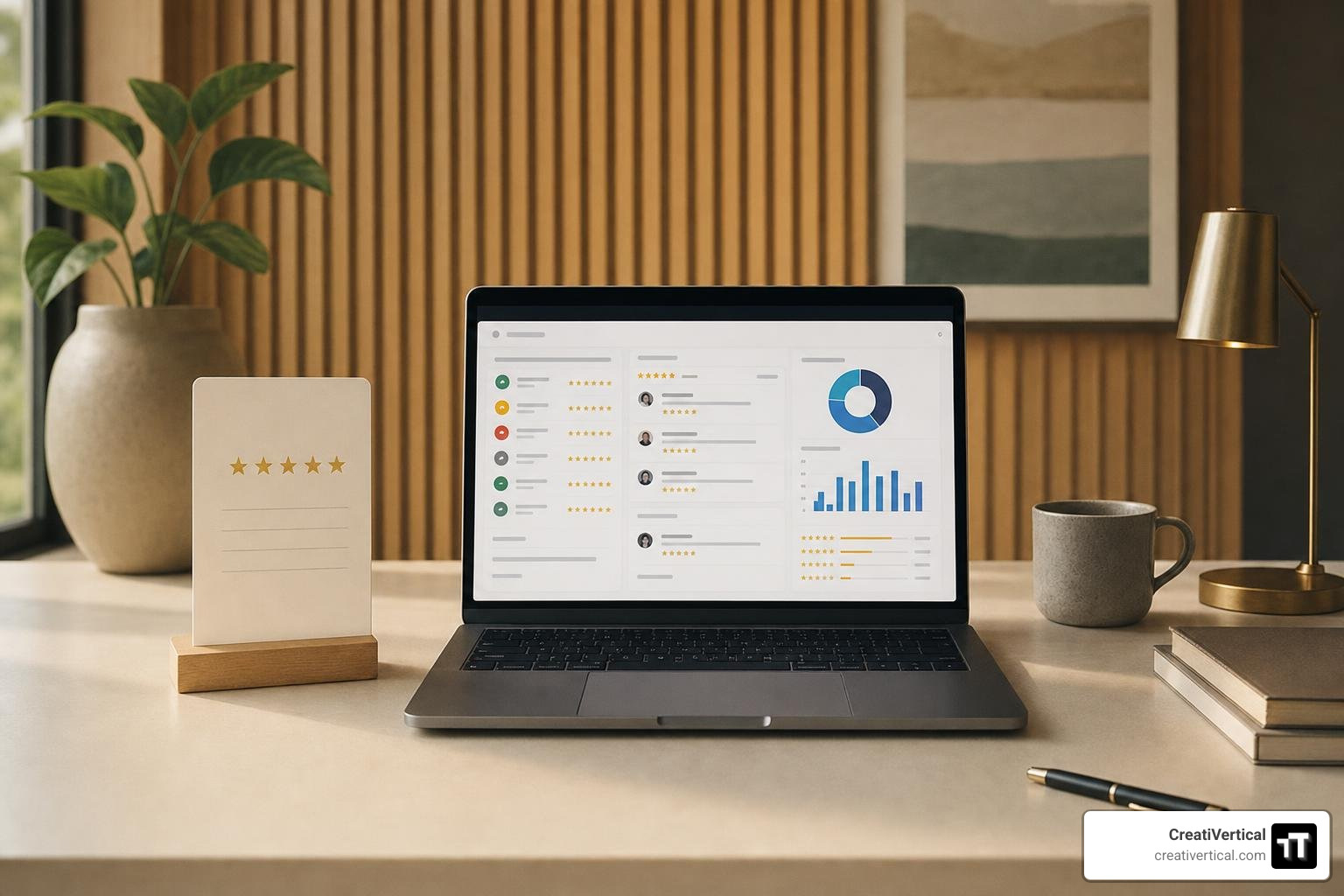
Always respond to every review — both positive and negative. Address the reviewer by name, thank them for their feedback, and mention the specific service or location. For example: “Thank you for the review, Sarah! We were happy to help with your commercial litigation needs in our Kansas City office.” This shows prospective customers that you care, and it feeds valuable semantic keywords back into Google’s index.
Finally, build high-quality local backlinks. A link from a local chamber of commerce, a regional news publication, or a local charity you sponsor carries immense geographic authority. If you support a youth sports team in Lake Tapawingo, that local link signals to Google that you are deeply rooted in the community.
For more actionable ideas on expanding your local footprint, read our list of 7 Tips to Improve Local Visibility Online.
Mobile, Voice, and AI: The Next Frontier of Local Discovery
We are living in a mobile-first, AI-driven world. More than 80% of “near me” searches occur on smartphones, often while the user is on the move. If your website takes more than three seconds to load on a mobile device, or if the navigation is difficult to use with a thumb, those high-intent searchers will click away and choose a competitor. Ensure your site uses WebP image formats, active browser caching, and prominent, tap-friendly click-to-call buttons.
At the same time, conversational search is fundamentally changing how people find local businesses. Instead of typing short keyword phrases, users are speaking long-tail, multi-filter questions into voice assistants and AI engines.
Instead of searching “machined parts KC,” an engineering buyer might ask their AI assistant: “Where is a ISO 9001 certified precision machining shop near Lake Tapawingo that can handle rapid prototyping for aerospace parts?”
This shift requires businesses to optimize for Large Language Models (LLMs) and conversational search engines like ChatGPT, Claude, and Perplexity. These AI crawlers do not rely on simple keyword matching. They evaluate full semantic intent, pulling data from business websites, forums, directories, and social platforms to generate a single, highly curated recommendation.
To understand the core mechanics of how these advanced systems process local queries, explore the technical masterclass on How LLMs Understand Local Intent: Near Me Queries, Conversational Search and Content Signals | Koading.
Voice Search and Generative Engine Optimization (GEO)
To optimize for voice search and Generative Engine Optimization (GEO), your content must be structured for easy extraction. AI crawlers favor direct, structured answers.
The best way to capture these queries is by building conversational FAQ sections on your service and location pages. Use “answer-first” formatting: place a clear, direct answer in the first two sentences of a section, then follow up with additional context, bullet points, and technical specifications.
Additionally, make sure your business information is highly verified across multiple authoritative sources. AI models rely on “entity trust.” If ChatGPT finds conflicting addresses or phone numbers for your business across the web, it will view your entity as unreliable and recommend a competitor with verified, consistent data instead.
If you are located in Jackson County, partnering with a specialized agency like CreatiVertical can help you audit and align your digital entity for these generative search crawlers.
Future-Proofing with Near Me Search Optimization
The traditional search engine results page (SERP) is evolving rapidly. While Google’s Local Pack remains incredibly important, AI-generated search overviews are increasingly capturing user attention.
To future-proof your business, you must optimize for both traditional search and AI discovery simultaneously. This dual approach ensures that whether a customer is typing a quick query on Google Maps, speaking to Siri, or asking ChatGPT for a recommendation, your business is the one that gets cited.
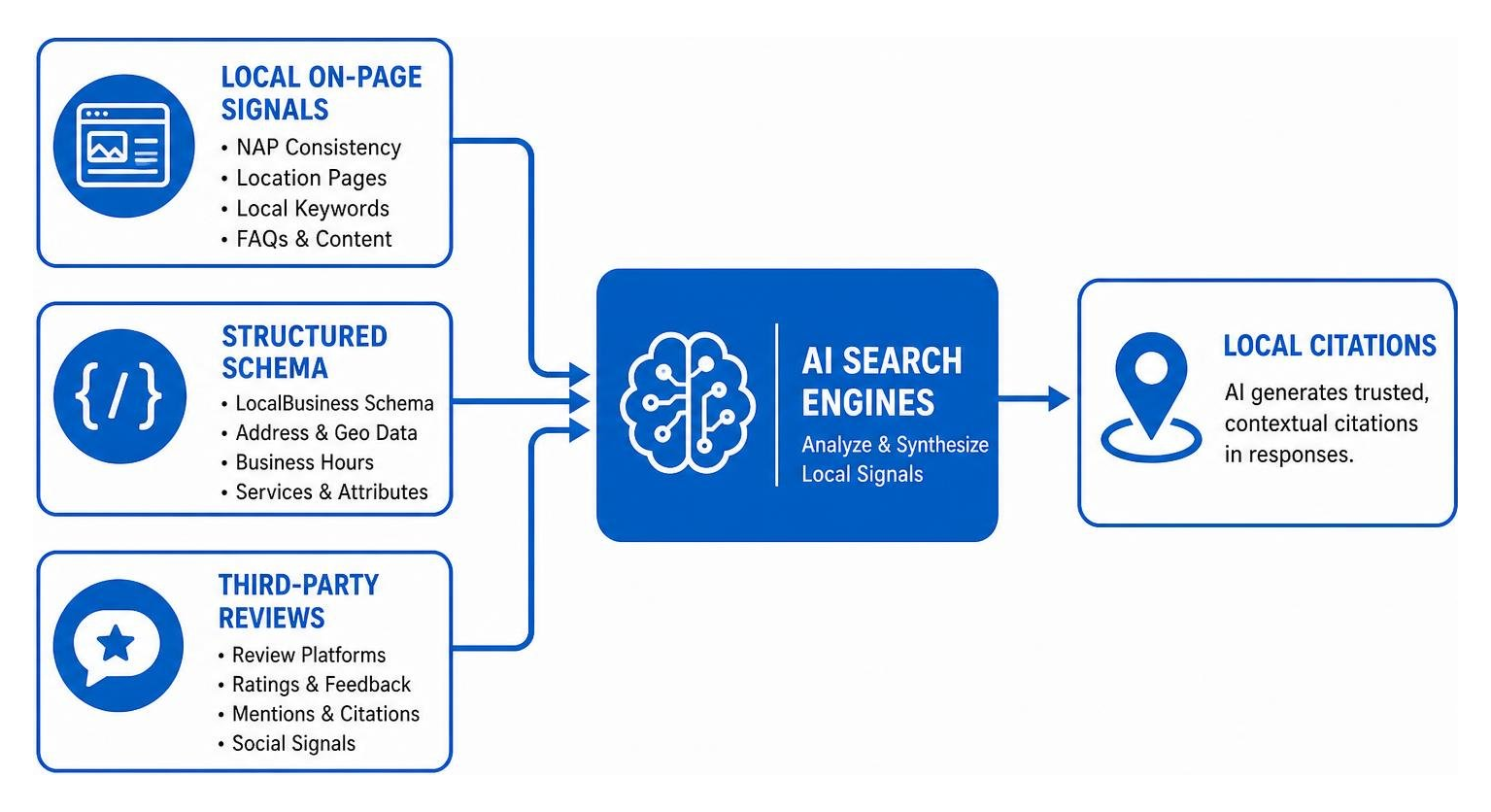
By building a robust local SEO system — complete with structured schema, hyper-local content, and strong third-party reviews — you establish the digital authority required to dominate the local search ecosystem. To explore how we build these performance-focused systems for local businesses, check out our dedicated SEO Services in Kansas City.
Frequently Asked Questions about Local SEO
Do I need to literally write “near me” on my website?
No. Forcefully stuffing the phrase “near me” into your website’s copy is an outdated tactic that can harm your user experience and make your brand look spammy. Google does not match the literal text “near me” on a page.
Instead, the algorithm uses the searcher’s physical location data (GPS, IP address) and matches it with the geographic signals on your website and Google Business Profile. Focus on natural phrasing, clear service-area mentions, and accurate schema markup.
How long does it take to rank for near me searches?
For most local businesses, initial improvements in local pack and map visibility can be seen within 30 to 90 days of optimizing your Google Business Profile, cleaning up citations, and gathering fresh reviews.
However, achieving top organic rankings for highly competitive keywords in major metropolitan areas typically requires a sustained effort of 6 to 12 months. Local SEO is an ongoing process of building authority and prominence.
As a general market guide, professional monthly SEO retainers typically range from a few hundred dollars to several thousand dollars per month, depending heavily on your market’s competitiveness, your geographic target, and your business goals.
Can service area businesses rank for near me queries?
Absolutely. If you run a business where you travel to customers (like a plumber, mobile detailer, or commercial IT technician) and do not have a storefront for walk-ins, you can still rank.
In your Google Business Profile settings, you can hide your physical address and define your exact service areas by city, county, or zip code. Google’s algorithm fully supports service area businesses, matching your defined boundaries with the searcher’s location.
Conclusion
Winning local customers through near me search optimization is not about chasing shortcuts or tricking search engines with keyword stuffing. It is about building a clean, consistent, and highly authoritative local presence that tells both Google and AI search engines exactly who you are, what you do, and where you do it.
At CreatiVertical, we don’t treat SEO as a one-off project or a generic checklist. We build complete, performance-focused digital systems designed to act as a long-term growth partner for your business.
Whether you are a local Kansas City service provider, a specialized B2B manufacturer in Missouri, or an offshore professional services firm, we design, promote, and maintain your digital presence to ensure you are found by the customers who are ready to buy.

Ready to stop playing hide-and-seek with your local customers? Let’s chart a course to dominate local search and fuel your business growth. Read our guide on 7 Tips to Improve Local Visibility Online to start optimizing your digital footprint today.