What a FedRAMP Compliant Website Redesign Requires
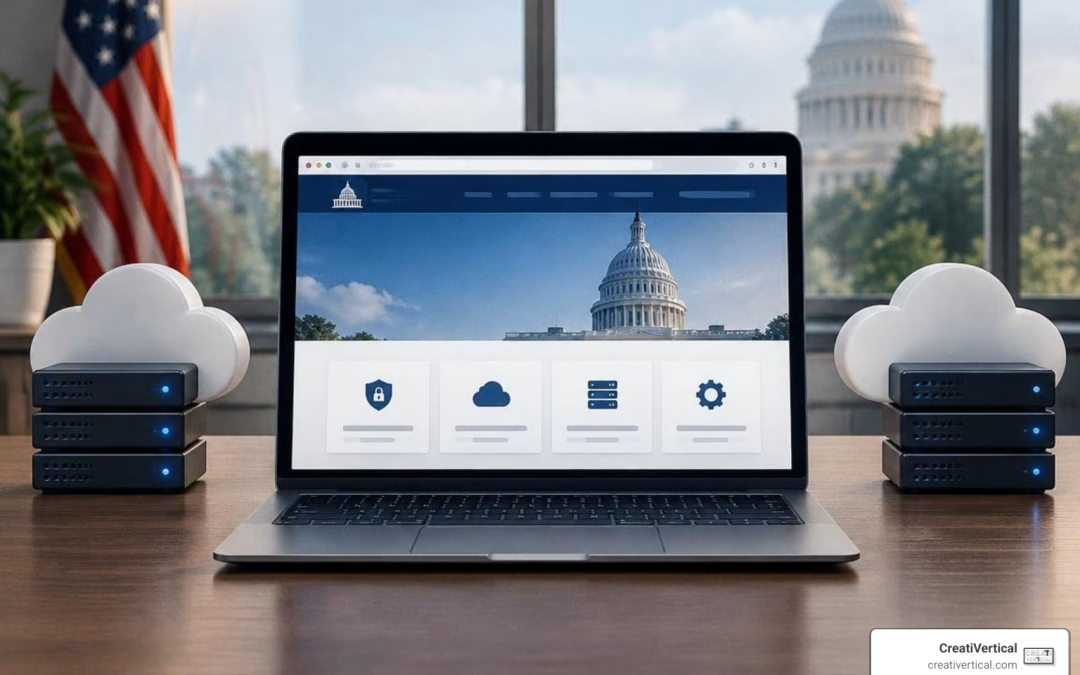
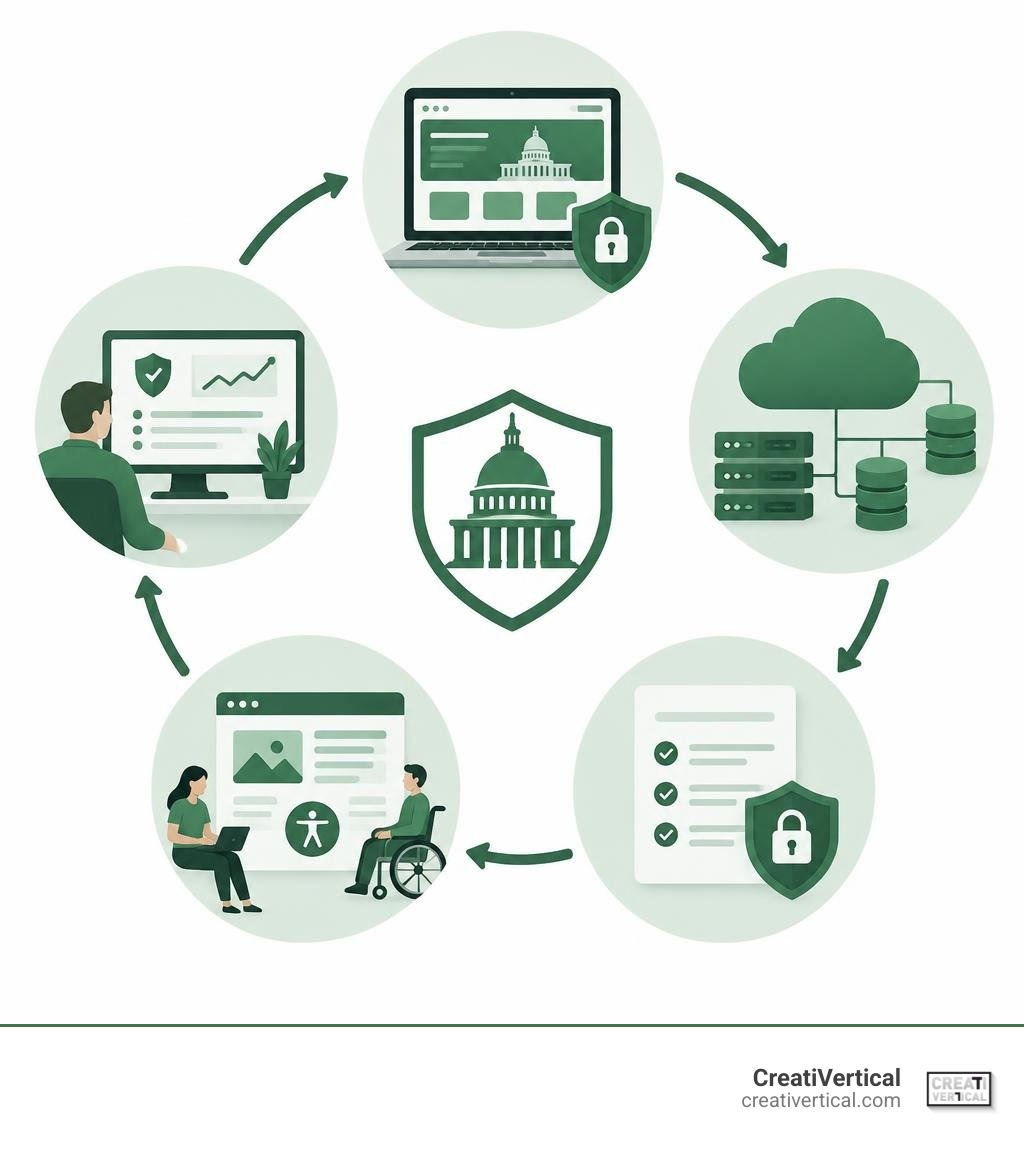
A FedRAMP compliant website redesign starts with the system boundary, not the page layout. Identify what federal data your site handles, check whether its cloud hosting and connected services are covered by the right FedRAMP authorization, and document which security controls your team must manage. Then build accessible pages, test the site, and plan for monitoring after launch. A redesigned website is not automatically FedRAMP certified just because it uses an authorized host.
For federal cloud vendors, that approach supports a site that is easier for agency buyers to use while keeping security claims accurate. The FedRAMP Marketplace redesign also shows why clear navigation and search matter when buyers need to evaluate cloud services.
I’m Nicholas Cunha, founder of CreatiVertical, and I’ve spent more than 20 years on digital projects, including websites for government and institutional clients. That experience informs how I approach a FedRAMP compliant website redesign: make the site useful and accessible, while being precise about what its hosting and security work actually cover.
Must-know FedRAMP compliant website redesign terms:
Navigating Modern Security Mandates: FedRAMP 20x and CR26
Federal web modernizations operate under strict security oversight. The Federal Risk and Authorization Management Program governs how cloud products process, store, and transmit federal information. Grounded in the security controls of NIST SP 800-53 Rev. 5, the FedRAMP program portal establishes standardized baselines across Low, Moderate, and High impact levels.
For federal contractors and cloud service providers (CSPs), redesigning a digital portal or public-facing application is not merely a visual refresh. Every technical adjustment—from server routing to dynamic search filtering—must adhere to strict authorization boundaries. Implementing secure by design principles for federal sites ensures that security protocols, session management, and continuous monitoring procedures are integrated directly into your underlying web architecture rather than treated as an afterthought.
Understanding Consolidated Rules for 2026 (CR26)
The Consolidated Rules for 2026 (CR26) unified fragmented guidance into a single, comprehensive standard for all cloud services. A central change in this framework is the formal transition in terminology from “Authorized” to “Certified,” standardizing how vendors represent their status.
Under CR26, continuous compliance expectations have been overhauled. Two major protocols now govern website lifecycle management:
- Significant Change Notifications (SCN): Any substantial architectural update to a certified system—such as migrating to a new content management system (CMS), changing authentication gateways, or altering database structures—requires a formal SCN before implementation.
- Collaborative Continuous Monitoring (CCM): CSPs must move away from sporadic manual reporting in favor of ongoing telemetry and routine quarterly reporting cycles.
Additionally, product listings reflect granular lifecycle labels, distinguishing between initial implementation and ongoing certification. CR26 also mandates dedicated Corrective Action Plan (CAP) indicators, making remediation transparent to reviewing authorizing officials.
FedRAMP 20x and Automated Security Indicators
The FedRAMP 20x initiative represents an evolution toward automated, machine-readable validation. Legacy authorizations often required hundreds of pages of static narrative documentation, creating friction and extending approval cycles over several months or years.
FedRAMP 20x addresses this bottleneck by replacing narrative control statements with 46 automated Key Security Indicators (KSIs). These indicators allow systems to output automated evidence pipelines, dramatically accelerating security assessments:
- Machine-Readable Artifacts: Security configurations, posture records, and decision logs are maintained in standardized JSON formats alongside human-readable documentation.
- Accelerated Authorization Cycles: By automating control validation, assessment timelines can be substantially compressed compared to traditional paths.
- Legacy Path Phaseouts: The program is actively steering organizations toward automated validation, with traditional Rev. 5 application intakes set to phase out after June 11, 2027.
Core Architecture for a FedRAMP Compliant Website Redesign
Building an enterprise-grade government contractor website requires establishing a secure hosting environment and defining the system boundary before writing front-end code.

Choosing the correct infrastructure is essential. Evaluating practical hosting strategies for federal compliance early ensures your underlying servers, CDNs, and databases possess active FedRAMP authorizations.
Pre-Migration Security Boundaries for a FedRAMP Compliant Website Redesign
Before migrating data or deploying new themes, your engineering team must establish a clean boundary isolation strategy within your System Security Plan (SSP). This boundary defines every service, script, API, and storage repository that interacts with your web portal.
Key baseline requirements include:
- Data-in-Transit Encryption: Enforcing strict TLS 1.3 across all incoming and outgoing connections, coupled with HSTS headers.
- Strict Role-Based Access Control (RBAC): Implementing multi-factor authentication (MFA) and least-privilege administrative workflows for all content editors and technical administrators.
- Vulnerability Remediation Pipelines: Integrating automated static and dynamic application security testing (SAST/DAST) into CI/CD deployment workflows.
Establishing these guardrails aligns with structured website redesign workflows that safeguard your security posture while meeting deployment deadlines.
Hosting Infrastructure: Cloud.gov Pages and FedRAMP-Authorized CMS
Federal agencies and contractor ecosystems rely on authorized infrastructure platforms to inherit fundamental operational controls.
- Cloud.gov Pages: Managed by the General Services Administration (GSA), the Cloud.gov Pages platform documentation demonstrates how static-site architectures and serverless deployments can meet 21st Century Integrated Digital Experience Act (IDEA) standards while eliminating back-end server attack vectors.
- Acquia Cloud Enterprise Gov: A FedRAMP Moderate-authorized platform specifically optimized for enterprise Drupal 10 and Drupal 11 architectures, supporting multi-site governance and automated patching.
- AWS GovCloud (US): Provides dedicated, isolated cloud infrastructure (Class D) designed to host regulated workloads and sensitive data with full control over virtual private clouds (VPCs).
| Hosting Platform | FedRAMP Baseline | Primary Architecture | Best Fit For |
|---|---|---|---|
| Cloud.gov Pages | FedRAMP Moderate (Inherited) | Static Site Generator / USWDS | Agency brochure sites, open-data portals, lightweight directories |
| Acquia Cloud Enterprise Gov | FedRAMP Moderate | Hardened Enterprise Drupal | High-volume content repositories, multi-site agency networks |
| AWS GovCloud | FedRAMP High / Moderate | Custom IaaS / PaaS Cloud | Complex SaaS applications, custom APIs, mission-critical workloads |
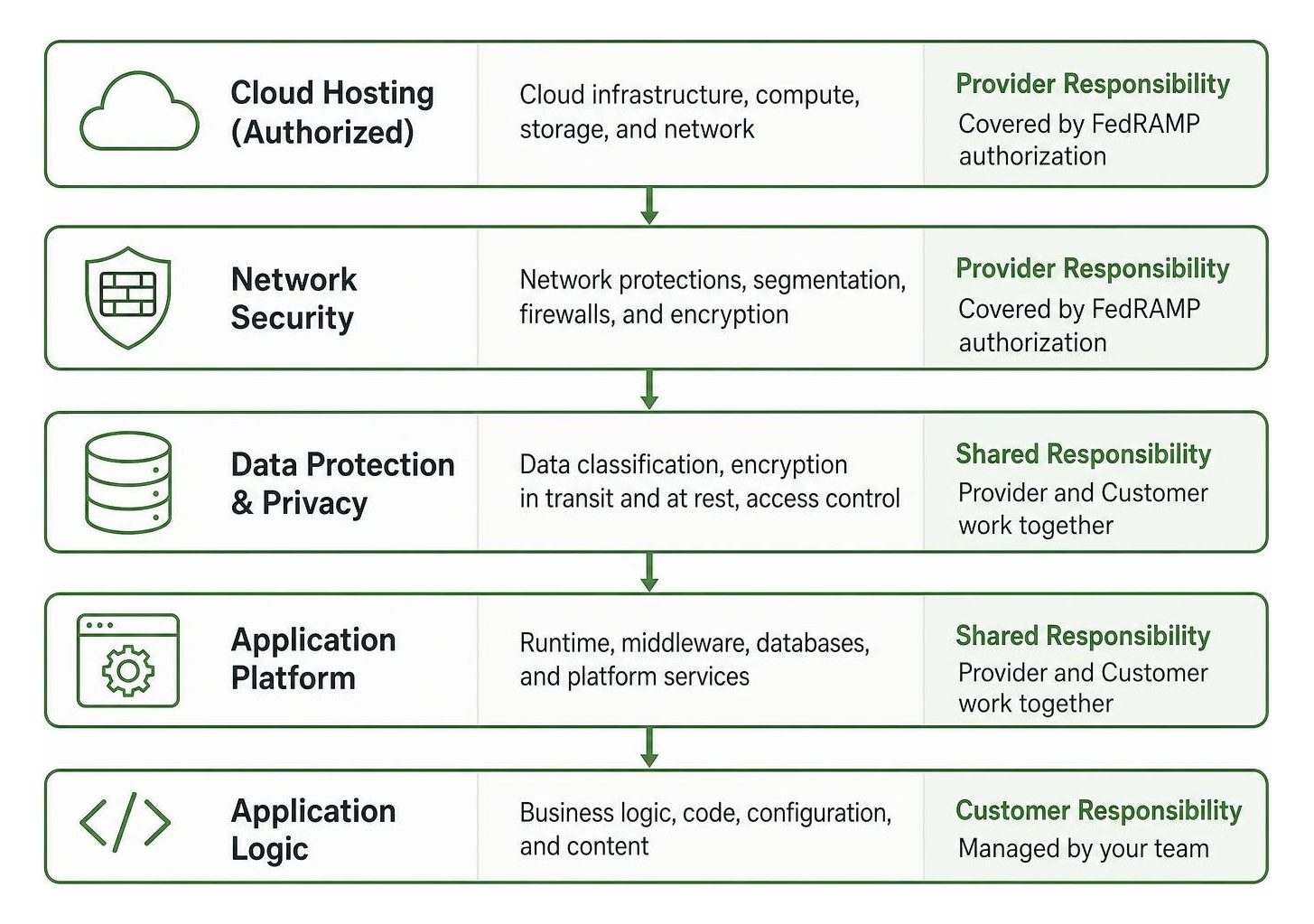
Under the shared responsibility model, while the hosting provider secures the physical data centers, hypervisors, and core networking, your organization remains responsible for application-level code, user access management, and front-end asset security.
Zero-Downtime Data and Asset Migration
Large-scale public-sector web modernizations often manage tens of thousands of legacy documents, regulatory filings, and media assets. When migrating mission-critical platforms, maintaining business continuity without broken links or service interruptions is essential.
- Comprehensive URL Preservation: Catalog all legacy URLs and map them directly to new structures to prevent 404 errors on critical regulatory filings and documentation.
- Parallel Staging Environments: Build and thoroughly test the new application in an isolated, accredited environment while the production website continues serving public traffic.
- Third-Party Script Auditing: Review all external analytics trackers, fonts, and embeds. Every external script introduces an external dependency that must comply with boundary security standards.
UX, Accessibility, and Design System Integration
A compliant federal website must balance rigorous back-end security with an accessible, human-centered front end.

Under the 21st Century IDEA and OMB Memorandum M-23-22, federal digital experiences must prioritize mobile responsiveness, streamlined navigation, and universal accessibility.
Implementing USWDS and Section 508 Standards
The U.S. Web Design System (USWDS) provides accessible, mobile-first design tokens and UI components tailored to public-sector digital standards. Integrating USWDS elements delivers a cohesive experience while ensuring adherence to Section 508 accessibility baselines:
- Accessible Color Contrast: Strict adherence to WCAG 2.1 AA standards, ensuring minimum contrast ratios for body copy, headings, and interactive elements.
- Full Keyboard Navigation: Complete interface functionality via keyboard controls, including visible focus states and skip-navigation links.
- ARIA & Screen-Reader Compatibility: Accessible Rich Internet Applications (ARIA) tags and semantic HTML to ensure screen readers accurately interpret complex filtering tools, tables, and modal dialogs.
Maintaining Search Visibility During a FedRAMP Compliant Website Redesign
Preserving hard-earned search rankings and domain authority is crucial during any platform migration. When URLs change, search engines must be promptly directed to the updated resources to prevent organic traffic loss.
Applying proven strategies for protecting search visibility during site overhauls ensures that redirect tables, XML sitemaps, and canonical tags are properly aligned. Clean metadata schemas and structured data help search engines understand your cloud authorization boundaries and solution offerings without ambiguity.
Lessons from the FedRAMP Marketplace Overhaul
The modernization of the FedRAMP Marketplace provides a practical benchmark for federal digital transformation. As documented in the U.S. Digital Corps case study and highlighted in the GSA Marketplace redesign announcement, the project redesigned the public directory to help agencies evaluate certified cloud offerings efficiently.
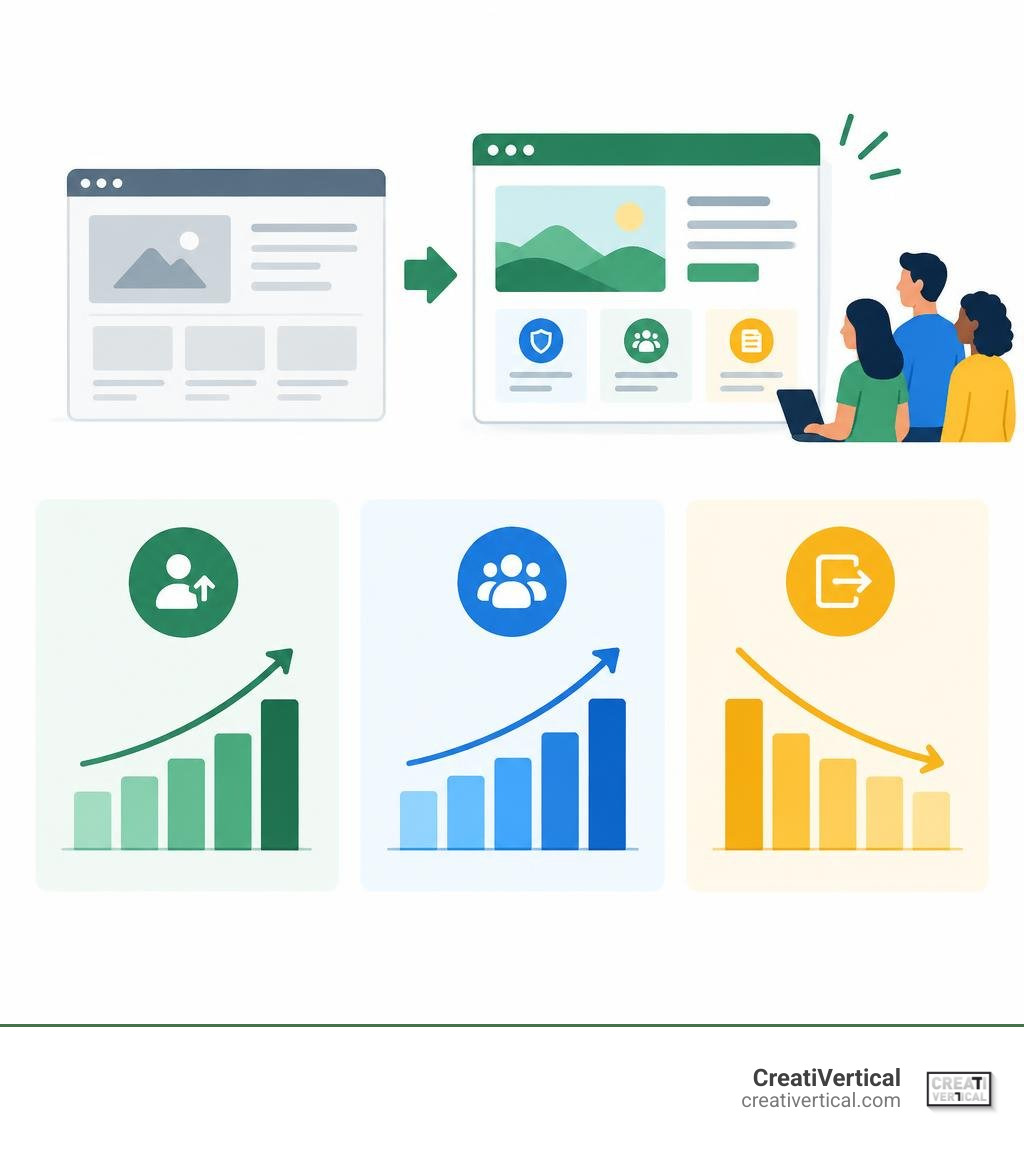
Executed by early-career U.S. Digital Corps fellows using modern component frameworks and USWDS design tokens, the initiative delivered notable performance improvements:
- 108% Increase in Engaged Sessions: Users navigated the marketplace with greater efficiency, reaching target cloud service profiles faster.
- 106% Increase in Engagement Rate: Intuitive search and filtering made compliance details straightforward to parse.
- 95% Reduction in Bounce Rate: Clear information architecture and rapid load times kept agency buyers engaged.
- Modernized Data Exports: Technical users gained the ability to export filtered results in CSV and JSON formats, alongside direct URL state syncing.
- Cost Avoidance: Leveraging internal federal fellows avoided an estimated $100,000 to $200,000 in outside contractor expenditures.
With more than 650 cloud services listed across the marketplace as of mid-2026—nearly double the count from two years prior—the redesign highlights how modern UX can scale to support growing compliance ecosystems.
Frequently Asked Questions About FedRAMP Web Modernization
How long does a FedRAMP-aligned website redesign typically take?
A typical website redesign and migration for a federal cloud vendor ranges from 3 to 9 months, depending on architecture complexity, data volume, and authorization requirements:
- Discovery & Boundary Definition (Weeks 1–4): Map system boundaries, audit data flows, and determine inherited control baselines.
- Architecture & UX Design (Weeks 5–12): Develop USWDS-compliant wireframes, build accessible templates, and configure hosting infrastructure.
- Data Migration & Integration (Weeks 13–20): Execute zero-downtime content migration, establish URL redirects, and integrate secure APIs.
- Testing & Independent Assessment (Weeks 21–28): Conduct vulnerability assessments, Section 508 audits, and prepare System Security Plan documentation.
- Deployment & Continuous Monitoring (Weeks 29+): Finalize staging cutover, verify analytics, and begin ongoing reporting protocols.
What is the primary difference between FedRAMP 20x and legacy Rev 5 paths?
The primary difference lies in validation methodology and documentation format. Legacy Rev. 5 paths rely heavily on static, narrative-driven System Security Plans that require manual review by Third-Party Assessment Organizations (3PAOs) and agency sponsors.
FedRAMP 20x utilizes 46 machine-readable Key Security Indicators (KSIs), allowing systems to automate compliance evidence collection. This data-driven approach shortens assessment timelines and reduces ongoing reporting overhead.
Can contractors inherit security controls from existing FedRAMP-certified platforms?
Yes. Contractors building on authorized cloud service providers (such as AWS GovCloud, Cloud.gov, or Acquia Cloud Gov) inherit physical, environmental, and infrastructure-level security controls directly from that provider’s package.
However, your organization remains responsible for customer-managed controls within the shared responsibility model. You must secure application code, manage user authentication, maintain access controls, and ensure all front-end digital assets comply with federal standards.
Conclusion: Charting Your FedRAMP Modernization Course
Redesigning a federal contractor website requires balancing strict security protocols, accessibility standards, and clean user experience. By establishing clear system boundaries, leveraging authorized infrastructure, and designing around USWDS standards, your team can build a digital presence that earns public sector trust and supports agency procurement workflows.
At CreatiVertical, we serve as an ongoing digital partner for government contractors, industrial manufacturers, and specialized B2B organizations. Whether you need to align your web architecture with modern compliance standards, safeguard organic search visibility, or implement automated digital workflows, we help teams navigate complex technical landscapes with clarity and confidence.
Ready to align your digital platform with modern federal standards? Explore how we build high-performance web systems and modernize your agency-facing digital presence today.