
Where Industrial AI Agents Fit in a Kansas City Plant
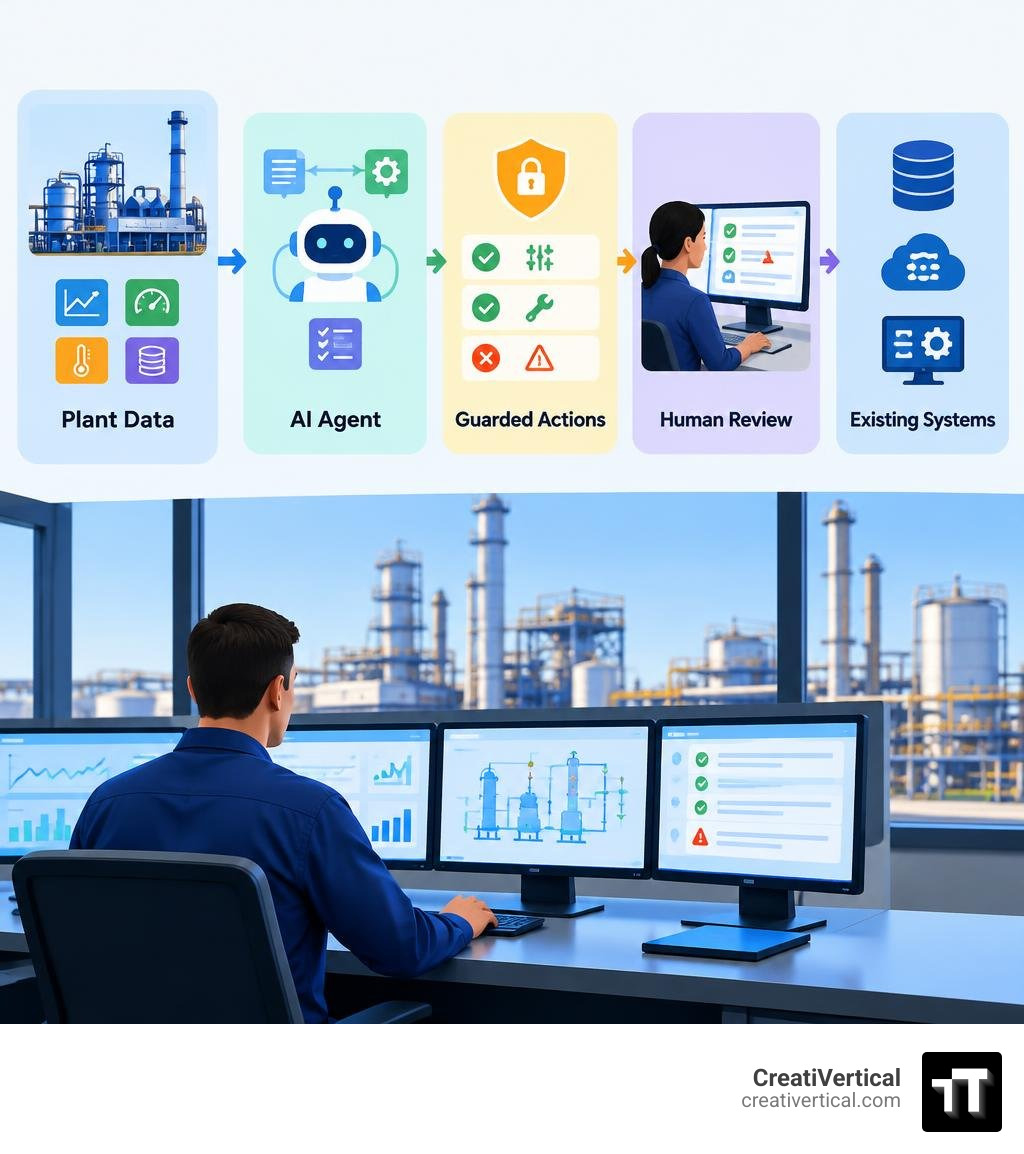
Start with one costly, repeatable workflow such as dispatch planning, maintenance triage, or data checks. Give the agent access to the plant data and systems it needs, but limit what it can change. Require a person to approve high-risk actions, then measure time saved and errors caught before expanding. Unlike a chatbot that only answers questions, an industrial AI agent can gather information, plan steps, use connected tools, and flag exceptions.
This guide covers where agents can help, how they connect to existing systems, and what to check before a pilot goes live.
I’m Nicholas Cunha, founder of CreatiVertical, where I build AI agents and multi-agent automations for real business workflows. My approach to Kansas City industrial AI agents draws on that hands-on work and my experience serving industrial and B2B clients.
Kansas City industrial AI agents vocab explained:
- industrial equipment manufacturer PPC
- precision parts manufacturer AI search
- industrial website design
Understanding Kansas City Industrial AI Agents in Plant Operations
Industrial operations across the Kansas City metropolitan area operate in high-consequence environments. Whether you run a precision CNC machine shop, mix bulk concrete, blend commercial lubricants, or build advanced battery packs, your daily margin lives or dies on operational efficiency.
For years, facilities relied on rigid rule-based automation or internal conversational bots. A standard script executes a fixed routine if a condition is met. An enterprise chatbot searches documentation and outputs a text summary. An autonomous industrial AI agent, however, evaluates an open-ended goal, queries operational telemetry, plans sequential steps, calls external software tools, and verifies the outcome before escalating to a human supervisor.
| Capability Dimension | Deterministic Automation (RPA / Scripts) | Enterprise Chatbots (Conversational AI) | Autonomous Industrial AI Agents |
|---|---|---|---|
| Primary Function | Executes fixed, linear commands (If-This-Then-That). | Answers user prompts using indexed text. | Executes multi-step operational tasks autonomously. |
| Data Ingestion | Structured tables and fixed API schemas. | Unstructured text documents and PDFs. | Multi-modal telemetry, sensor streams, PDFs, and ERP data. |
| Decision Logic | Hardcoded branching rules. | Next-token statistical prediction. | Goal planning, reasoning loops, and error self-correction. |
| Action Execution | Rigid read/write actions on predefined triggers. | Static text generation without external tool execution. | Dynamic tool-calling across SCADA, MES, ERP, and logistics platforms. |
| Exception Handling | Throws an error and halts execution. | Hallucinates or replies with a fallback message. | Tries fallback steps, verifies data accuracy, or escalates to human review. |
To understand how these autonomous systems handle physical workflows, read all about custom AI agents for manufacturing.
Architectural Shift: From Reactive Dashboards to Autonomous Action
Traditional plant operations bury operators under hundreds of flashing dashboard dials. When a bearing overheats on a secondary milling line, a supervisory control and data acquisition (SCADA) alarm sounds. A plant engineer must pull up the line’s history, find recent work orders in the manufacturing execution system (MES), review the vendor runbook, and manually issue a repair ticket.
Autonomous agent architecture replaces this reactive sequence with closed-loop reasoning. When integrated with plant telemetry, an operational agent continually evaluates streaming inputs against baseline tolerances.
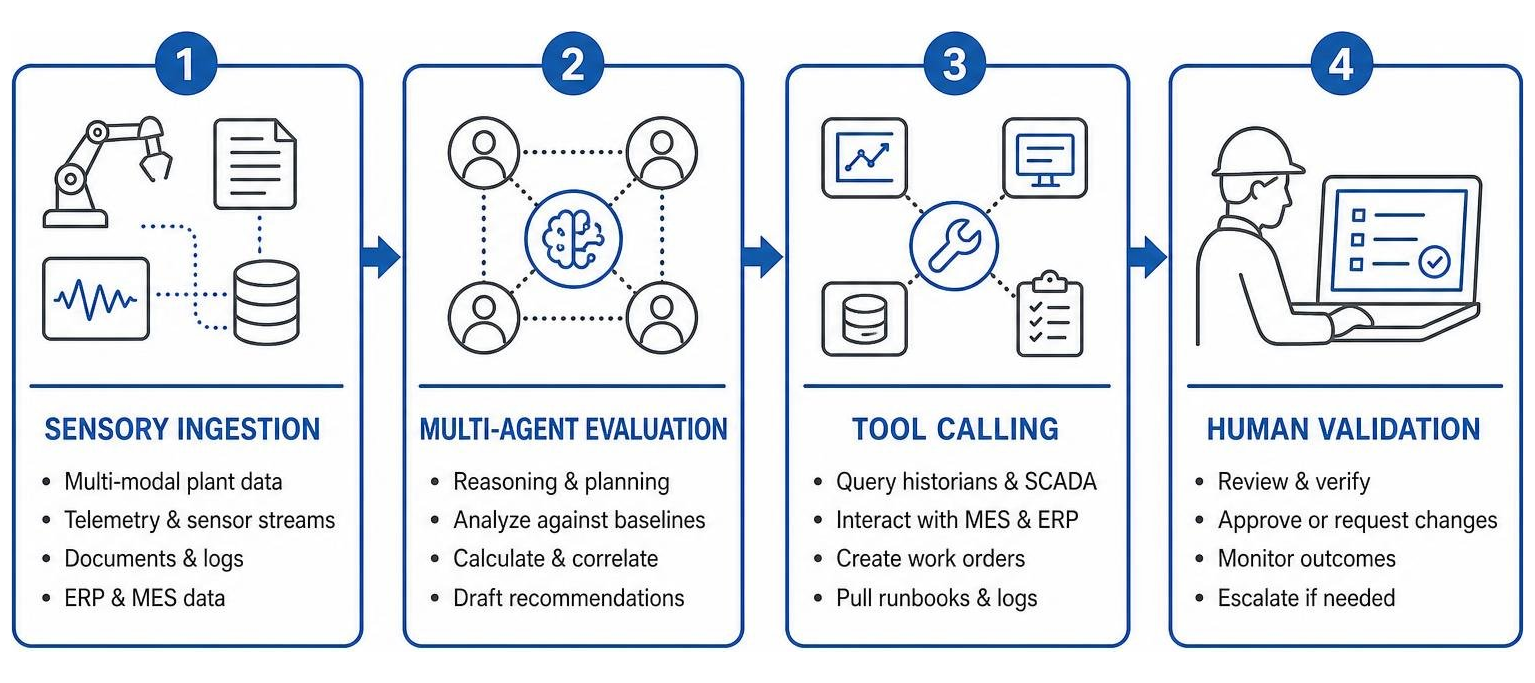
If vibration frequencies spike beyond standard operating limits, the agent does not merely flash a red light on a screen. It queries the operational historian, pulls historical maintenance logs, calculates mean time between failures for that specific component, drafts an exact repair checklist, and queues a draft work order in the ERP for supervisor sign-off.
Integrating Kansas City Industrial AI Agents with Legacy Plant Telemetry
Most industrial plants in the Kansas City corridor, from the Fairfax Industrial District to manufacturing parks along I-70 in Blue Springs and Lee’s Summit, run on a hybrid of modern platforms and decades-old machinery. Connecting advanced artificial intelligence to legacy programmable logic controllers (PLCs) requires structured integration layers.
- Protocol Normalization: Industrial edge gateways translate legacy serial protocols and Modbus signals into unified OPC-UA or MQTT data streams.
- Context Enrichment: Raw sensor values (such as temperature, torque, and pressure) are paired with machine identifiers, operational batch numbers, and environmental conditions.
- Secure API Adapters: The AI agent interacts with the plant via lightweight middleware adapters that maintain strict read/write permission boundaries.
- Unified Operational Presentation: High-performance internal portals surface agent outputs clearly to plant managers, built alongside modern web architecture for high tolerance industrial manufacturers.
This setup prevents the language model from interacting directly with raw control loops. Instead, it processes normalized telemetry through sandboxed verification layers, protecting physical plant safety while providing intelligent decision support.
Real-World Deployments: Logistics, Auditing, and Predictive Maintenance
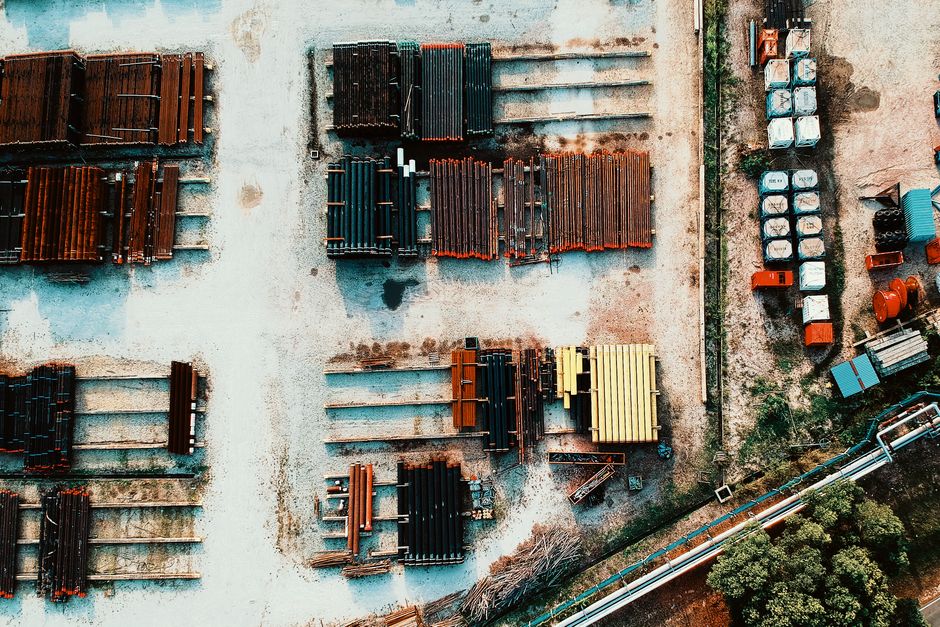
Industrial AI agents are already driving real-world operations across supply chain coordination, regulatory auditing, and heavy machinery maintenance.
Heavy Materials and Fleet Dispatch Optimization
In heavy construction materials and asphalt production, daily fleet dispatching is a logistical puzzle. Dispatchers must track driver availability, job site delivery windows, plant batching speeds, traffic congestion, and DOT hours-of-service compliance.
Purpose-built agentic workflows are showing what this looks like in practice. As highlighted in Concrete Products coverage of Agent XBE, autonomous agent platforms can coordinate complex driver assignment lineups in minutes—a process that typically takes human dispatchers hours of manual phone calls, whiteboards, and spreadsheets. The agent balances dispatch logistics, job-cost pricing, and material inventories, leaving human supervisors free to manage physical job-site exceptions.
High-Precision Data Auditing and Anomaly Detection
Precision industrial operations generate massive volumes of sensor readings, batch records, and compliance records every shift. Manual quality audits often take days, meaning production errors or bad sensor data can slip through unnoticed.
In the carbon removal and industrial biomass sector, autonomous auditing agents have proven their ability to catch discrepancies overnight. For instance, Charm Industrial’s Agent350 case study demonstrates how autonomous auditing agents review daily measurement, reporting, and verification (MRV) data points while the plant is offline.
By evaluating daily mass balances and checking for anomalies against historical baselines, the agent flags data entry errors, missing fields, and batch losses in real time. Instead of waiting weeks for external audits, engineering teams receive a natural-language discrepancy summary directly in internal communication channels every morning.
Multi-Agent Predictive Maintenance on the Factory Floor
Unplanned equipment downtime can cost high-tolerance manufacturing plants significant revenue each hour. Predictive maintenance agents address this by combining real-time sensor processing with retrieval-augmented generation (RAG).
Building these production systems requires rigorous evaluation frameworks. As shown in Likhitha Kuppa’s GenAI evaluation framework, systematic testing across real-world production queries helps ensure response accuracy in critical equipment failure scenarios before rollout.
In these systems, an orchestrator agent splits diagnostic workloads across specialized sub-agents:
- Log Ingestion Agent: Parses unstructured equipment fault codes and historical sensor traces.
- Knowledge Retrieval Agent: Queries vector databases (such as FAISS or Pinecone) containing indexed equipment manuals, vendor runbooks, and past maintenance tickets.
- Validation Agent: Compares real-time vibration and thermal telemetry with baseline engineering limits to confirm the root cause before alerting maintenance crews.
The Industrial AI Agent Factory: Architecture and Implementation Roadmap
Deploying autonomous agents across an industrial facility requires a structured, governed engineering architecture rather than ad-hoc, isolated scripts.
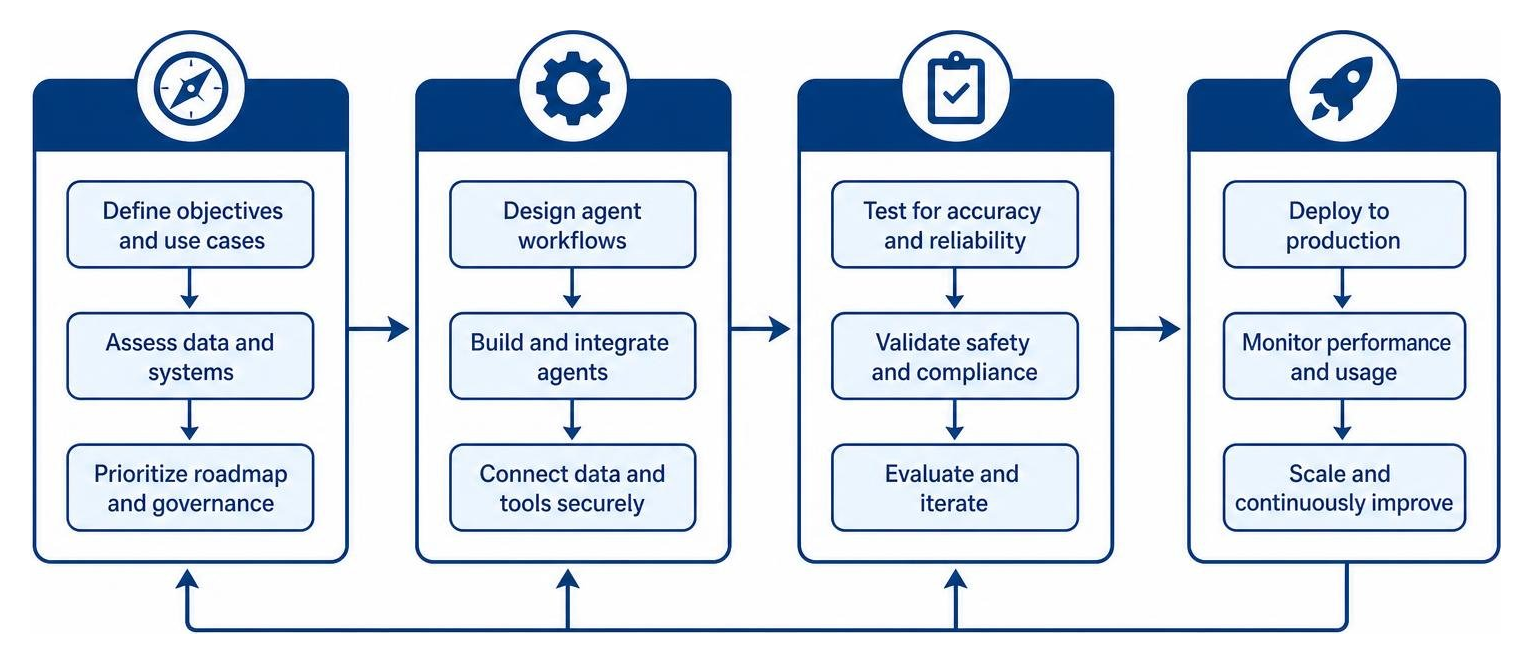
To build reliable industrial workflows, organizations frequently employ prompt engineering principles and context pipelines, driven by the rising demand for prompt engineers across technical fields.
Core Components of an Enterprise Agent Factory
A scalable industrial agent factory rests on four core operational pillars:
- Multi-Agent Orchestration: A central orchestrator breaks complex industrial directives into distinct tasks, delegating them to domain-specific sub-agents (e.g., procurement, quality control, dispatch).
- Enterprise Knowledge Systems: Vector databases index standard operating procedures (SOPs), safety data sheets, technical CAD specifications, and maintenance histories with strict version control.
- Execution Tool Registry: A sandboxed suite of API connectors that allow agents to query ERP databases, draft CRM updates, read telemetry pipelines, or generate purchase requisitions.
- Human-in-the-Loop Governance: Automated guardrails that flag edge cases, demand human approval for actions above predefined cost or risk thresholds, and log every reasoning step for auditable review.
Four-Phase Transformation Framework for Regional Plants
Deploying enterprise-grade agents in an industrial setting follows a structured 10-to-18-week implementation timeline:
- Phase 1: Discovery & Workflow Analysis (Weeks 1–3): Map physical plant handoffs, pinpoint operational bottlenecks, identify data sources, and define strict success metrics for a single pilot use case.
- Phase 2: Knowledge Base & Context Build (Weeks 4–7): Clean, tag, and index internal documentation, SOPs, and telemetry archives into a secure retrieval-augmented generation (RAG) pipeline with explicit provenance tracking.
- Phase 3: Agent Development & Testing (Weeks 8–15): Build orchestrators, implement tool adapters, set up validation routines, and test model responses against real-world plant failure scenarios.
- Phase 4: Deployment, Training, & Knowledge Transfer (Weeks 16–18): Deploy agents to internal virtual private clouds (VPCs) or edge appliances, train line operators and supervisors, and establish real-time performance monitoring.
Data Ownership, Edge Security, and Regulatory Governance
Industrial manufacturers cannot allow proprietary recipes, toolpath configurations, or confidential batch data to train public foundation models.
Kansas City industrial deployments preserve full data ownership by hosting agent infrastructure within the client’s private cloud perimeter or local data center. By implementing strict read/write database separation, automated provenance tagging, and role-based access control, plants ensure sensitive operational logs remain completely private while meeting strict compliance standards.
The Growing Kansas City AI Talent Pool and Ecosystem
The Kansas City metropolitan area has developed into a strong Midwestern hub for industrial automation, applied artificial intelligence, and enterprise software engineering.

Local manufacturers and B2B enterprises are increasingly building visibility for their engineering capabilities online, using generative engine optimization for precision machining and custom parts suppliers to capture procurement demand across modern AI discovery engines.
Engineering Leadership and Technical Roles in the Metro Area
Regional engineering firms and technology consultancies are making substantial investments in dedicated automation leadership:
- Regional engineering and infrastructure firms, such as OWN, Inc., have established dedicated leadership for internal workflow modernization, creating Director of AI & Automation roles.
- Enterprise technology practices across the metro actively recruit systems architects and AI automation specialists to implement multi-agent pipelines and connected data systems.
- Specialized technology firms across the metro area—such as 27Global, Torch.ai, 360 Automation AI, and Pendulum—provide deep expertise in MLOps, multi-agent frameworks, and secure enterprise infrastructure.
Scaling Kansas City Industrial AI Agents Across Regional Supply Chains
The Kansas City region’s dense industrial base provides fertile ground for connected, multi-agent operations. When suppliers, logistics providers, and assembly plants share structured, automated data feeds, entire regional ecosystems become more resilient:
- Precision Machining & Tooling: Agents track spindle wear, automate raw bar-stock reordering, and balance CNC job queues.
- Bulk Chemicals & Lubricants: Automated agents monitor batch blending temperatures, reconcile mass balances, and generate regulatory safety documentation.
- Commercial Battery Manufacturing: Systems track cell impedance drift across automated assembly lines and isolate defective units before packaging.
- Heavy Materials & Ready-Mix: Fleet logistics agents synchronize mixer truck dispatches with real-time pour rates at construction sites across the metro area.
Frequently Asked Questions About Industrial AI Agents
How do industrial AI agents differ from traditional automation scripts?
Traditional automation scripts rely on fixed rules: if variable A exceeds a threshold, execute action B. If an unexpected condition occurs—such as a missing field, an unformatted sensor log, or an out-of-order process step—the script breaks.
Industrial AI agents use large language models with reasoning capabilities. They interpret unstructured data, determine the necessary sequence of steps to solve an open-ended goal, call appropriate software tools, evaluate their own intermediate outputs, and adapt to operational exceptions.
How long does it take to deploy an industrial AI agent in a manufacturing facility?
A standard enterprise agent deployment takes between 10 and 18 weeks from initial discovery to live plant operation:
- Weeks 1–3: Workflow mapping and identifying data integration points.
- Weeks 4–7: Knowledge base engineering, data cleaning, and vector indexing.
- Weeks 8–15: Agent development, system integration, and safety evaluation.
- Weeks 16–18: Production rollout, operator training, and dashboard setup.
Facilities usually start with a focused pilot covering 2 or 3 high-impact tasks before rolling out agents across the broader plant.
Can industrial AI agents operate securely on on-premises infrastructure?
Yes. Industrial AI agents can be deployed on private cloud infrastructure (such as AWS GovCloud or Azure Government) or on-premises edge servers inside an air-gapped plant network.
By using open-weights foundation models deployed in local containers, operational telemetry, CAD files, and proprietary batch formulas never leave your physical security perimeter.
Conclusion
Industrial AI agents represent a practical step forward for plant operations. By turning manual dispatch coordination, maintenance log reviews, and compliance audits into governed, multi-agent workflows, regional manufacturers can boost productivity, reduce downtime, and protect their margins.
At CreatiVertical, we build complete digital systems and applied AI automations as an ongoing growth partner for industrial manufacturers and B2B businesses. Whether you need to streamline plant workflows or modernize your enterprise website development and digital infrastructure, we help you plan, build, and operate systems designed for measurable performance.