

Core Architectural Principles of Precision Machining Web Development
Precision manufacturing operates on tight margins and exact specifications. When mechanical engineers, sourcing leads, and procurement directors land on your website, they are not looking for marketing slogans. They are conducting a rapid technical evaluation to determine if your facility can hold required tolerances on complex geometries.
Effective web development for precision machine shops requires structuring your site as a direct extension of your shop floor. Every page must convey technical competence, operational capacity, and strict quality control through well-organized data.
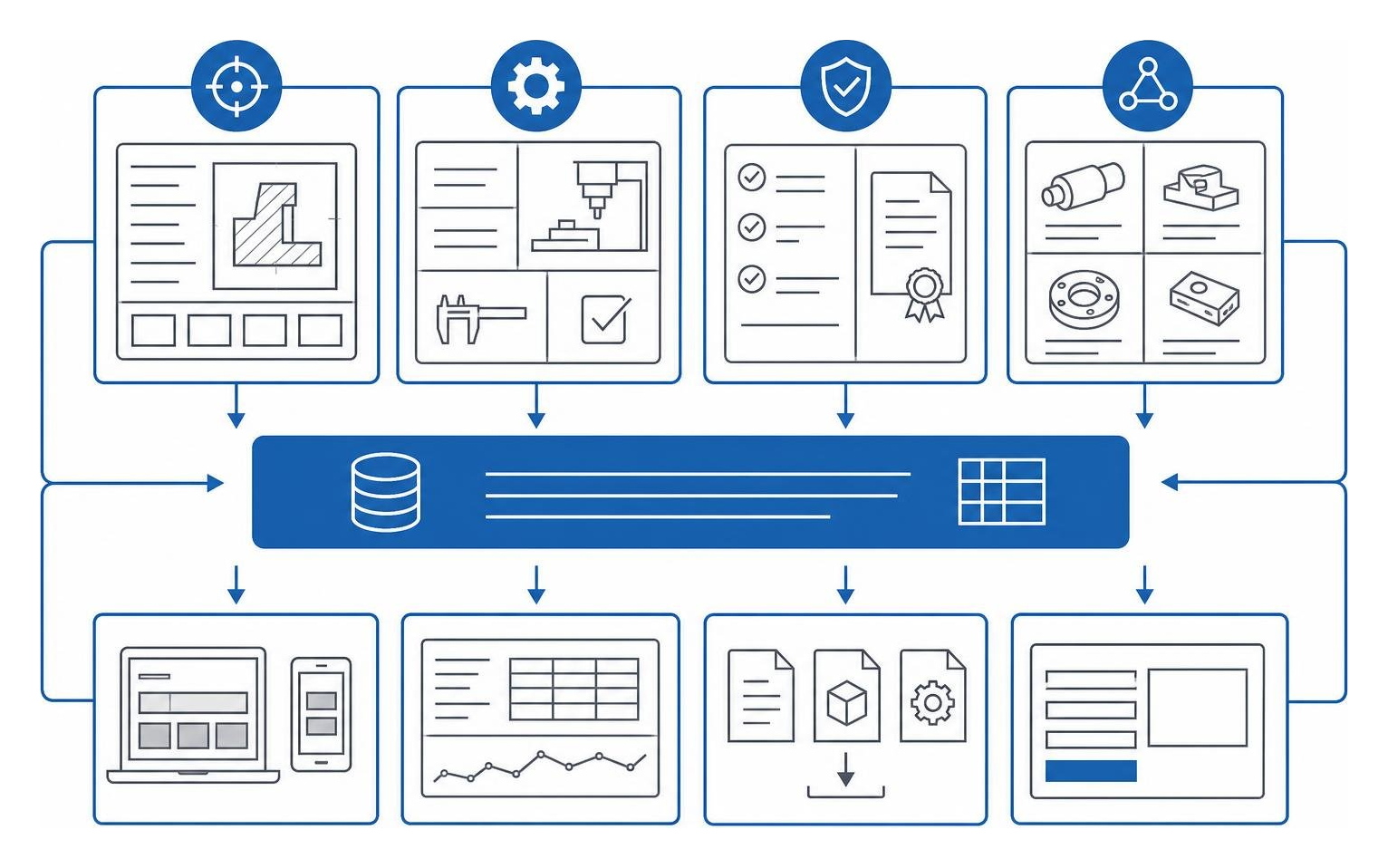
Engineering-First UX: Precision Machining Web Development for Technical Evaluators
Engineers evaluate vendor websites with a critical eye. If critical specifications are hidden behind generic copy, they will bounce back to search results within seconds. An engineering-first user experience relies on structured layouts—often built on a disciplined 8px grid—to present high-density technical data cleanly across desktop and mobile screens.
Applying industrial website design best practices means replacing adjectives like “ultra-precise” with verifiable metrics. Instead of stating you produce “micro-precision components,” provide exact capabilities:
- Linear positional accuracy (e.g., ±0.0001″ / ±2.5 µm)
- Surface finish capabilities (e.g., Ra 4 µin / 0.1 µm)
- Maximum spindle speeds (e.g., up to 42,000 RPM for micro-milling)
- Coordinate Measuring Machine (CMM) volumetric accuracy
Balancing Industrial Visual Authority with Numeric Precision
Industrial buyers appreciate clean, functional aesthetics that reflect the cleanliness and order of an advanced manufacturing facility. A balanced design pairs modern visual hierarchy—such as high-contrast themes and clean typography—with interactive schematics and precise technical data.
Presenting real shop-floor data through dynamic elements helps bridge the gap between complex engineering capabilities and rapid digital vetting. For instance, incorporating interactive visual cues—such as technical drawings that resolve on scroll or live dimensional readouts—reinforces your technical authority. Speaking the visual language of engineering builds immediate trust with technical evaluators.
Aligning your digital presence with engineering expectations is a core component of B2B technical brand development.
Trust Architecture: Showcasing Certifications, Tolerances, and Materials
Aerospace, defense, and medical device buyers cannot issue a Request for Quote (RFQ) to an unvetted vendor. Your digital trust architecture must make compliance verification effortless.
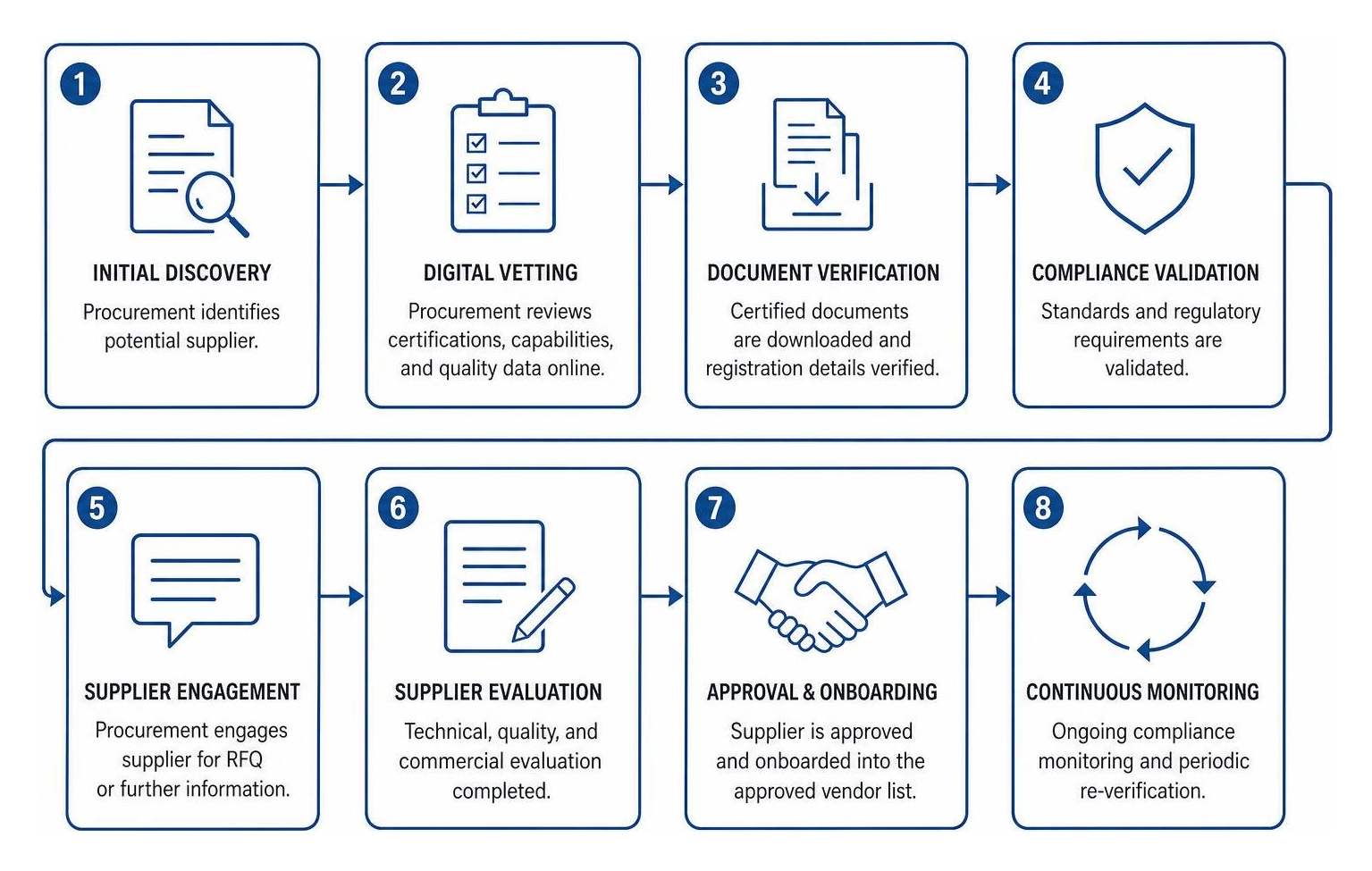
Hero-Level Compliance: AS9100D, ISO 13485, and ITAR Integration
Critical certifications should never be relegated to an unlinked footer graphic. Key quality badges must be positioned within the top viewport of your primary landing pages, accompanied by official registration numbers, registrar details, and downloadable audit certificates.
For Tier 1 aerospace, defense, and medical procurement teams, standard vetting protocols require clear proof of:
- Aerospace: AS9100D certification, AS9102 First Article Inspection (FAI) reporting workflows, and Nadcap accreditation for special processes.
- Medical: ISO 13485 compliance and documented cleanroom or passivation capabilities.
- Defense: ITAR registration and cyber compliance alignment, utilizing principles of secure defense-ready web architecture to ensure export-controlled data is handled properly.
- Automotive & Industrial: PPAP Level 3 documentation, Statistical Process Control (SPC) tracking, and ISO 9001:2015 certification.
Interactive Equipment Lists and Material Capability Matrices
Procurement teams search by machine envelope, axis count, and material compatibility. Providing interactive, filterable equipment lists allows buyers to quickly confirm whether your shop can handle their part dimensions.
Technical education centers like Precision Machining Technology – State Tech train machinists on multi-axis CNC mills, Swiss lathes, and EDM systems. Your website should showcase that modern machinery with granular detail:
| Machine Category | Axis Count | Work Envelope (X, Y, Z) | Typical Tolerances | Primary Materials Supported |
|---|---|---|---|---|
| 5-Axis Machining Centers | 5 Continuous | 30.0″ x 20.0″ x 20.0″ | ±0.0002″ (±5.0 µm) | Titanium (Ti 6Al-4V), Inconel 718, Stainless 316L |
| Swiss CNC Turning | 7 to 9 Axis | Max Dia: 1.25″ / L: 12.0″ | ±0.0001″ (±2.5 µm) | Nitinol, PEEK, MP35N, Brass, 17-4 PH Stainless |
| Wire / Sinker EDM | 4-Axis Wire | 15.7″ x 11.8″ x 9.8″ | ±0.00008″ (±2.0 µm) | Hardened Tool Steels (D2, A2), Carbide, Hastelloy |
| High-Precision Grinding | Multi-Surface | Max Length: 24.0″ | ±0.00005″ (±1.2 µm) | High-Speed Steels, Ceramics, Tool Steels |
Secure Infrastructure: High-Converting RFQ Workflows and CAD Portals
Your RFQ portal is the primary conversion engine of your website. If an engineer encounters file-size limits, missing NDA assurances, or broken upload scripts, the quoting opportunity is lost.
Frictionless, Encrypted CAD Uploads and NDA Integrations
Technical buyers frequently handle proprietary designs subject to intellectual property protections and export regulations. An enterprise-grade RFQ portal should streamline file transfer while maintaining strict data governance.
Key capabilities for a secure RFQ workflow include:
- Support for standard CAD formats: STEP (.stp, .step), IGES (.igs, .iges), Parasolid (.x_t), SolidWorks (.sldprt), and DXF/DWG.
- End-to-end 256-bit AES encryption for files in transit and at rest.
- Integrated mutual non-disclosure agreement (MNDA) execution options prior to file upload.
- Explicit confirmation of data storage jurisdiction and access controls.
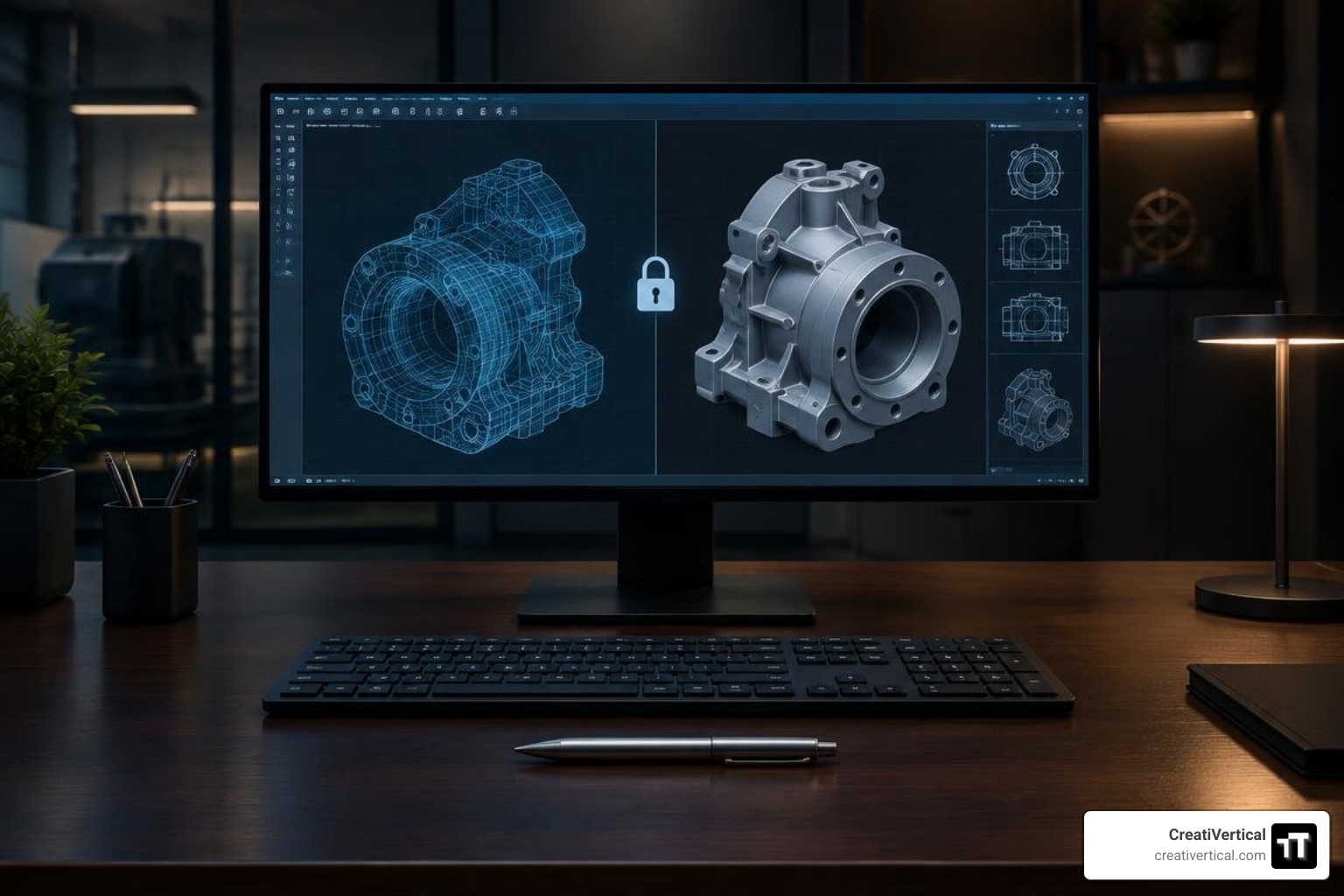
Implementing these features requires robust enterprise website infrastructure practices to safeguard customer data.
High-Performance Web Hosting and Core Web Vitals
Industrial websites often handle heavy technical assets, including high-resolution imagery and interactive component models. Without performance optimization, page weight quickly degrades load times and search visibility. Targeted asset compression and script optimization can substantially reduce page load times on industrial sites.
Ensuring fast page delivery involves:
- Serving assets via an edge Content Delivery Network (CDN).
- Implementing responsive image delivery and modern formats (WebP, AVIF).
- Deferring non-critical scripts to maintain strong Google Core Web Vitals (LCP, INP, CLS).
- Employing modern performance optimization strategies to maintain technical search rankings across major algorithm updates.
Search Visibility: Industrial SEO and Answer Engine Optimization (AEO)
Achieving strong search visibility requires targeting the specific technical queries used by sourcing professionals. Beyond traditional keyword rankings, manufacturing websites must now optimize for AI-assisted procurement tools that extract structured capability data directly from web pages.

Implementing Schema and AEO in Precision Machining Web Development
Procurement specialists increasingly rely on conversational AI platforms and search engines with generative summaries to find specialized suppliers. Answer Engine Optimization (AEO) ensures these systems accurately parse and cite your shop’s capabilities.
To optimize your site for AI search models:
- Deploy structured JSON-LD schemas (
Organization,Service,FAQPage,ItemAvailability). - Clearly format capability statements with explicit parameters (materials, axes, tolerances, lot sizes).
- Use question-and-answer sections addressing specific technical and compliance topics.
- Utilize AI search optimization tools to monitor how your brand and capabilities appear across emerging discovery platforms.
Capturing High-Intent Procurement Queries via Technical SEO
Generic terms like “metal parts manufacturer” face broad competition and attract unqualified inquiries. Industrial SEO should focus on high-intent, long-tail technical phrases that match immediate production requirements:
- 5-axis CNC machining Inconel 718 aerospace
- ISO 13485 certified Swiss micro-machining surgical components
- Sub-micron precision wire EDM tight tolerance tooling
- ITAR registered CNC turning shop for defense prototypes
Structuring dedicated service pages around these technical competencies helps capture qualified search traffic and route buyers directly to relevant capability data.
Frequently Asked Questions About Precision Machining Websites
Why do most precision machining websites fail to convert technical buyers?
Most industrial websites fail because they treat technical buyers like casual consumers. They hide tolerance limits, omit specific machine models, bury quality certifications behind multiple clicks, and provide generic contact forms that cannot handle native CAD files. When an engineer cannot quickly verify that your facility possesses the machinery, materials, and certifications needed to build their part, they move to the next supplier on their list.
How can a precision machine shop optimize for AI procurement tools and answer engines?
Optimizing for AI search tools and generative procurement engines requires providing structured, unambiguous data. You can achieve this by implementing detailed JSON-LD markup on every service page, structuring machine specifications and supported alloy lists into clean HTML tables, maintaining clear FAQ sections on inspection processes, and publishing explicit certification data (including standard versions, registrars, and scope statements).
What security standards are required for handling proprietary CAD files on an RFQ portal?
At a minimum, an RFQ portal handling proprietary CAD files should provide 256-bit AES encryption in transit (HTTPS/TLS) and at rest on secure cloud storage. For shops supporting defense or aerospace clients, the upload infrastructure must comply with ITAR and CMMC data handling standards, including restricted data access, US-based hosting facilities, and automatic audit logging for every file upload and download.
Conclusion
A precision machining website is not a static digital brochure—it is a critical piece of your sales and procurement infrastructure. By organizing technical data clearly, showcasing verifiable quality certifications, providing secure CAD upload workflows, and implementing structured SEO and AEO best practices, you turn digital traffic into qualified RFQs.
At CreatiVertical, we help industrial manufacturers, government contractors, and technical enterprises build high-performance digital systems that drive long-term growth. Explore our approach to custom precision machining website development to align your digital presence with your shop floor’s capabilities.