

Start AI Powered SEO Optimization With Better Decisions
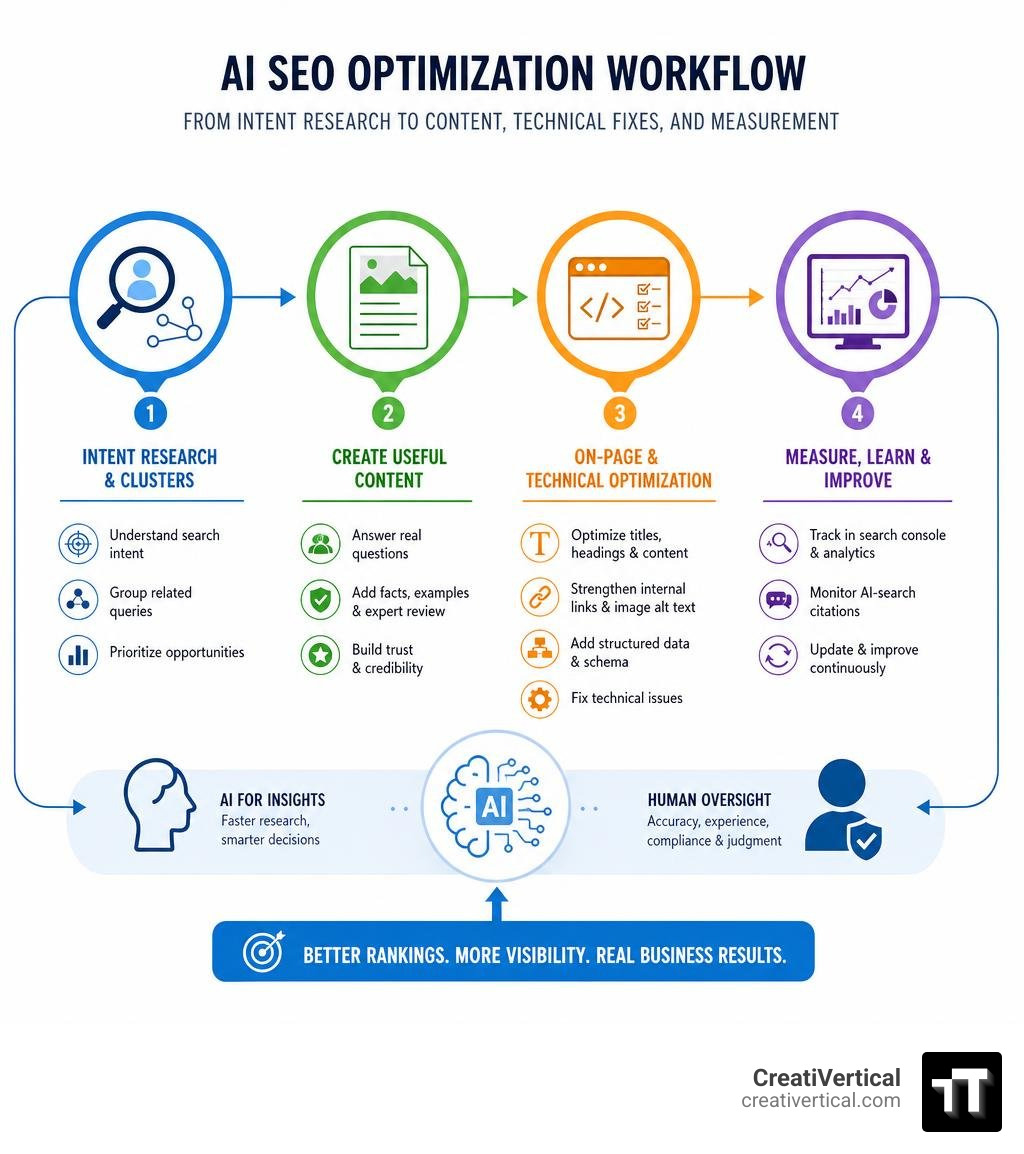
AI powered SEO optimization uses AI to speed up research, spot content and technical gaps, and improve pages for both Google results and AI answer engines. Start with a practical workflow:
- Find search intent and keyword clusters instead of targeting isolated keywords.
- Build useful pages that answer the buyer’s real questions with clear facts, examples, and expert review.
- Improve on-page basics such as titles, headings, internal links, image alt text, and structured data.
- Monitor performance in Google Search Console, analytics, and AI-search citation reports, then update pages that lose relevance.
The goal is not to let software publish an endless stream of generic copy. It is to use AI for the repetitive data work, while people remain responsible for accuracy, experience, compliance, and business judgment.
Traditional SEO often relies on manual spreadsheet research, periodic audits, and broad keyword reports. AI can process much larger datasets quickly, group related queries by meaning, identify competitor gaps, and flag technical problems before they become harder to find. It can also help teams prepare drafts, metadata, schema suggestions, and content briefs faster.
That matters because search is no longer limited to ten blue links. Buyers may ask Google, ChatGPT, Perplexity, Gemini, or another answer engine a detailed question before they ever visit a website. For a Kansas City service firm, offshore professional-services practice, manufacturer, or public-sector technology vendor, the useful response is the same: publish clear, credible information that search systems can understand and prospective customers can trust.
I am Nicholas Cunha, founder of CreatiVertical, with more than 20 years of agency and project experience across web development, SEO, and digital work for institutional, professional-services, industrial, and small-business clients. I apply AI powered SEO optimization through practical AI agents, automation pipelines, and hands-on work in the web stack, with human review where accuracy, trust, and compliance matter.
Understanding AI SEO: Foundations and Core Principles
Modern organic visibility requires moving past static keyword lists. Search algorithms process natural language to interpret the underlying purpose behind every query. Rather than matching literal character strings, search platforms evaluate topical breadth, context, and structural coherence.
Applying machine learning and natural language processing allows marketers to analyze millions of search data points rapidly. These technologies uncover nuanced user behavior patterns, recognize emerging market shifts, and guide strategic decisions before rankings fluctuate. Staying ahead of these shifts is essential, particularly when navigating The Complete Guide to Understanding Google Core Algorithm Updates to preserve organic performance across algorithm refreshes.
What Is AI SEO and How Does It Operate?
AI SEO combines machine learning models, natural language processing, and neural matching to streamline technical site audits, keyword clustering, content evaluation, and search intent discovery.
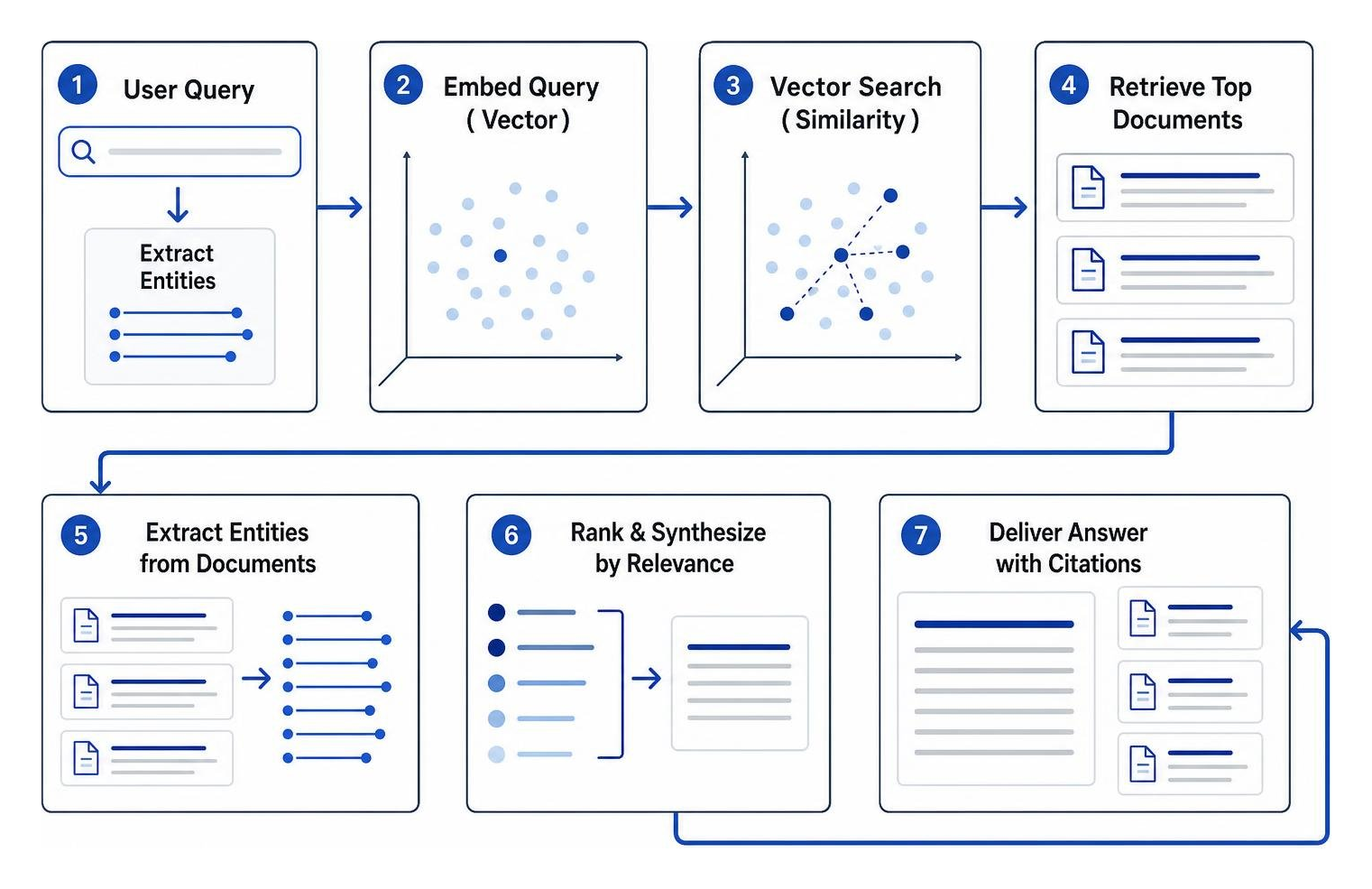
Search engines evaluate text using vector embeddings—mathematical representations that capture the semantic relationships between words, entities, and concepts. When a prospective client searches for a solution, the search platform maps those vector coordinates to identify pages demonstrating comprehensive entity extraction and direct relevance.
On the practitioner side, AI platforms analyze top-performing URLs across search engine results pages (SERPs), map entity coverage, and generate prescriptive optimizations for technical architecture, on-page copy, and site metadata.
Traditional SEO vs. AI Powered SEO Optimization
Traditional search marketing relies heavily on manual keyword research, periodic site crawls, static competitor spreadsheets, and subjective editorial reviews. In contrast, modern AI-driven search execution handles data synthesis programmatically, identifying patterns across vast datasets in seconds.
| Feature / Dimension | Traditional SEO | AI Powered SEO Optimization |
|---|---|---|
| Keyword Research | Manual volume filtering and individual keyword targeting via spreadsheets | Semantic intent clustering, entity mapping, and predictive query discovery |
| Content Optimization | Static keyword density checks and manual competitor analysis | Real-time SERP entity gaps, readability analysis, and prompt-based content briefs |
| Technical Audits | Scheduled monthly crawls requiring manual issue triaging | Machine-speed error detection, automated log analysis, and programmatic schema checks |
| Competitive Intelligence | Periodic manual backlink checks and competitor page reviews | Real-time LLM prompt tracking, share-of-voice monitoring, and automated gap alerts |
| Execution Velocity | Slower cycles constrained by manual data gathering and human review | Rapid brief creation, automated draft structuring, and programmatic publishing pipelines |
Step-by-Step Implementation of AI Powered SEO Optimization
Shifting to an AI-assisted search workflow transforms data gathering into a structured, repeatable production process. By combining automation with human strategic oversight, teams can scale organic publishing pipelines without sacrificing technical rigor. Adopting Adaptive SEO Services: The Ultimate Guide to Staying Ahead of Google establishes an adaptable operating framework that responds to evolving search algorithms and generative discovery platforms.
1. Keyword Discovery and Semantic Intent Clustering
Targeting isolated search terms often leads to fragmented keyword cannibalization and incomplete topical coverage. Search platforms prioritize domains that establish topical authority across entire subject spaces.
Using AI-driven clustering tools, teams can organize large lists of raw queries into coherent semantic clusters in minutes. For example, specialized grouping software can categorize hundreds of keywords into distinct intent buckets almost instantaneously—a process that historically required hours of manual spreadsheet sorting.

Modern search strategy also requires tracking how conversational AI tools surface brands. With platforms like Semrush One tracking over 100 million prompts across ChatGPT, Google AI Mode, Perplexity, and AI Overviews across major regions, tracking visibility across conversational queries has become as critical as monitoring standard SERP positions.
2. E-E-A-T Content Generation and Semantic Enrichment
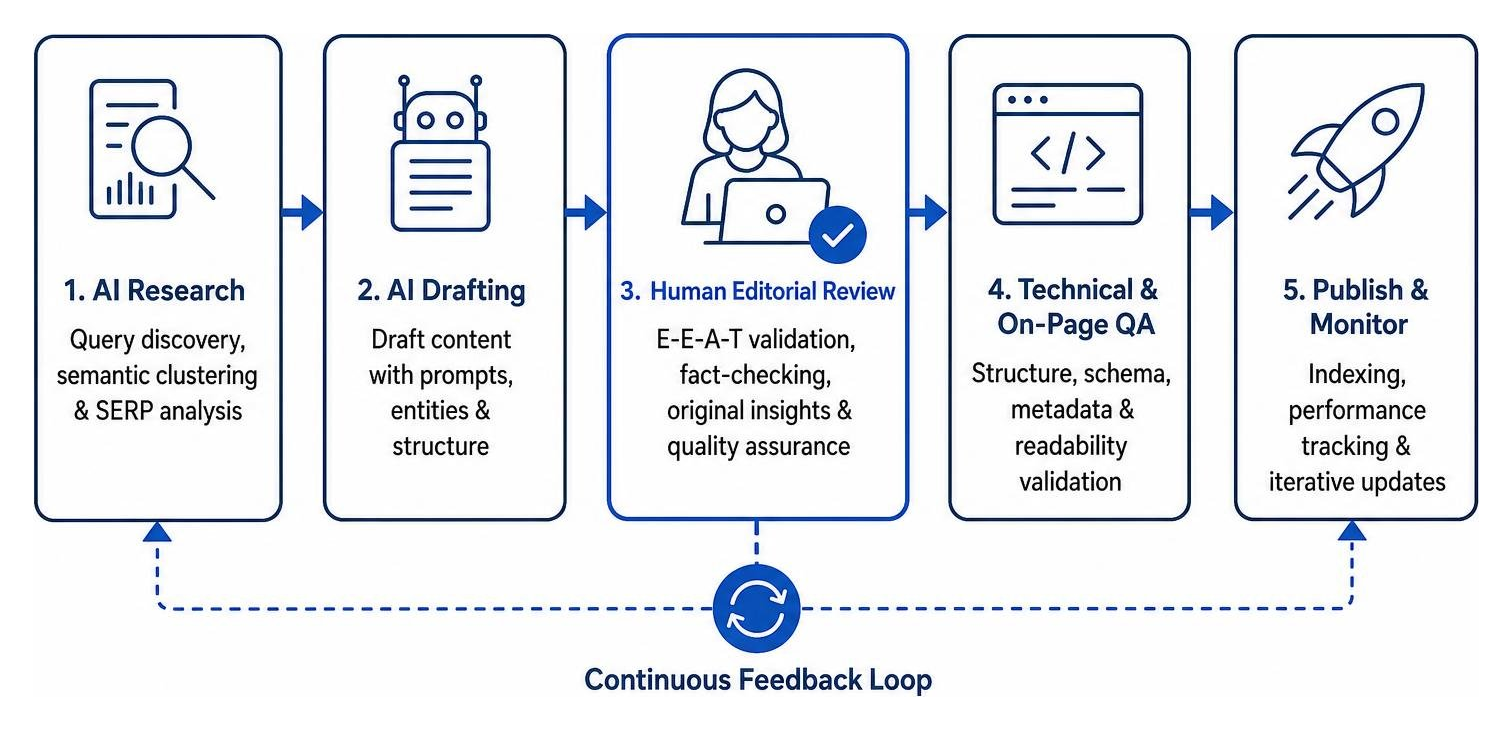
Search engines prioritize content demonstrating Experience, Expertise, Authoritativeness, and Trustworthiness (E-E-A-T). AI content assistants accelerate research, drafting, and semantic enrichment, but human domain experts must provide original perspective, case examples, and factual verification.
Structured frameworks help convert raw prompt outputs into high-performing resources. Implementing prompt-engineering frameworks like the open-source RankWise SEO Content Engine allows teams to audit and align draft copy against dozens of ranking factors, verifying structural elements, entity coverage, and readability benchmarks across multiple languages before publication.
Content scoring tools provide measurable benchmarks for quality and depth. Industry testing demonstrates that content meeting target optimization thresholds achieves top-tier organic visibility significantly faster than unoptimized text, while under-optimized drafts frequently struggle to gain traction.
3. Automated On-Page Structure, Schema, and Fast Indexing
On-page technical structure helps search bots and language models parse content hierarchies cleanly. Machine learning systems assist in drafting descriptive title tags, compelling meta descriptions, contextual image alt text, and logical heading hierarchies that directly reflect underlying search queries.

Structured data markup provides search engines with clear machine-readable context about organizations, products, and legal jurisdictions. Developers can automate this technical foundation using open-source SEO and GEO automation scripts, which generate valid JSON-LD schema, configure robots directives for AI crawlers, and build sitemap architectures.
Accelerating discovery and indexing remains a primary technical priority. Using dedicated indexing automation software like Indexly, webmasters frequently achieve page indexing within 6 to 12 hours rather than waiting several days. For large catalogs or multi-page site launches, accelerated indexing ensures fresh commercial assets begin accumulating search signals promptly.
4. Competitive Intelligence, Link Prospecting, and Authority Building
Backlinks from authoritative, contextually relevant websites remain a fundamental organic ranking signal. Machine learning models analyze competitor link profiles to pinpoint unlinked brand mentions, directory inconsistencies, and high-value editorial targets based on historical outreach conversion patterns.
Modern workflows deploy AI agents to streamline competitive gap detection and relationship management. Using systems like SEO Agent automated workflows, teams can connect site audit insights directly to execution playbooks, identifying off-page authority gaps and optimizing internal anchor text distributions across high-performing landing pages.
Evaluating the Best AI SEO Tools and Performance Metrics
Selecting the right software stack requires assessing real data accuracy, CMS compatibility, and API connectivity. For an extensive technical review of current industry solutions, review A Comprehensive Guide to the Best AI Search Optimization Tools 2026.
Leading AI Platforms for Optimization and Content Intelligence
Different platforms excel at specific stages of the search workflow:
- Comprehensive Search Intelligence: Platforms like Semrush One combine traditional keyword databases with cross-platform prompt tracking across ChatGPT and Google AI Overviews.
- SERP-Based Content Optimization: Tools like Surfer SEO, Clearscope, and Rankability analyze top-ranking competitors in real time, delivering prescriptive guidance on entity usage, content structure, and topical depth. Surfer SEO’s Content Editor reduces manual competitive analysis time by roughly two hours per article.
- Specialized Content Monitoring: Rankability’s Content Monitor actively flags declining pages before organic traffic drops, enabling proactive editorial updates.
- Execution and Indexing Automation: Tools like Indexly and Keywordly handle technical indexing and automated keyword clustering at scale.
Measuring ROI and AI Powered SEO Optimization Performance
Measuring search performance requires evaluating both traditional organic traffic and brand presence across emerging AI discovery engines. Track core performance metrics including:
- Organic Traffic and Keyword Trajectories: Monitor impressions, click-through rates, and average positions in Google Search Console.
- AI Share-of-Voice and Citations: Track citation frequency and brand visibility across ChatGPT, Gemini, and Perplexity using The Ultimate Tools to Keep Your Brand Visible Across AI Search Platforms.
- Conversion Rates and Revenue Attribution: Measure qualified form submissions, demo requests, and direct sales originating from organic and AI referral channels.
Industry retainer pricing varies based on project scope, market competition, and organizational objectives. As a general market guide, monthly professional SEO retainers typically range from a few hundred dollars for localized campaigns to several thousand dollars per month for competitive enterprise engagements.
Enterprise Considerations: GEO, Answer Engines, and Compliance
Search behavior continues to evolve toward conversational synthesis. Generative Engine Optimization (GEO) focuses on structuring website content so large language models can extract, verify, and cite business information within conversational answers.
Securing citations across platforms like ChatGPT and Perplexity requires clear factual data, strong entity validation, and consistent brand mentions. At the same time, organizations operating in highly regulated environments must maintain rigorous data governance. When integrating automated workflows, public-sector vendors and security-focused enterprises can consult How to Adopt FedRAMP Compliant AI Services Without Giving Your Security Officer a Panic Attack to ensure tool deployments adhere to federal privacy and compliance standards.
Frequently Asked Questions About AI SEO
Can AI SEO tools completely replace human strategists?
No. AI tools automate repetitive data analysis, surface competitive gaps, and accelerate drafting, but human strategists remain essential. Human oversight ensures brand voice consistency, validates factual accuracy, provides original industry perspective, and aligns optimization initiatives with broader business objectives.
How do conversational answer engines decide which websites to cite?
Conversational engines select sources based on semantic relevance, entity authority, structural clarity, and citation consistency across the web. Pages that answer specific queries directly with structured facts, valid schema markup, and verifiable claims are significantly more likely to be cited in AI-generated answers.
Does Google penalize websites for publishing AI-assisted content?
Google evaluates content based on its quality, helpfulness, and alignment with search intent, rather than whether it was produced using AI tools. Content that provides accurate information, satisfies user queries, and adheres to Google Search Essentials ranks well, whereas unreviewed, automated spam designed solely to manipulate search results faces algorithmic devaluation.
Conclusion: Future-Proofing Your Organic Growth
Building sustainable organic visibility requires balancing automated data analysis with expert human execution. Combining AI-driven research with high-standard editorial review ensures your digital assets rank in traditional search results while earning authoritative citations across modern conversational answer engines.
At CreatiVertical, we design and manage integrated digital systems—combining web development, search optimization, GEO, and applied AI automation for clients in Kansas City, Missouri, Lake Tapawingo, Missouri, and specialized enterprise markets. For organizations evaluating agency partnerships in compliance-driven sectors, explore how to choose the best FedRAMP compliant digital agency to secure a reliable, performance-focused growth partner.