

Which Local Keyword Research Tool Should You Choose?
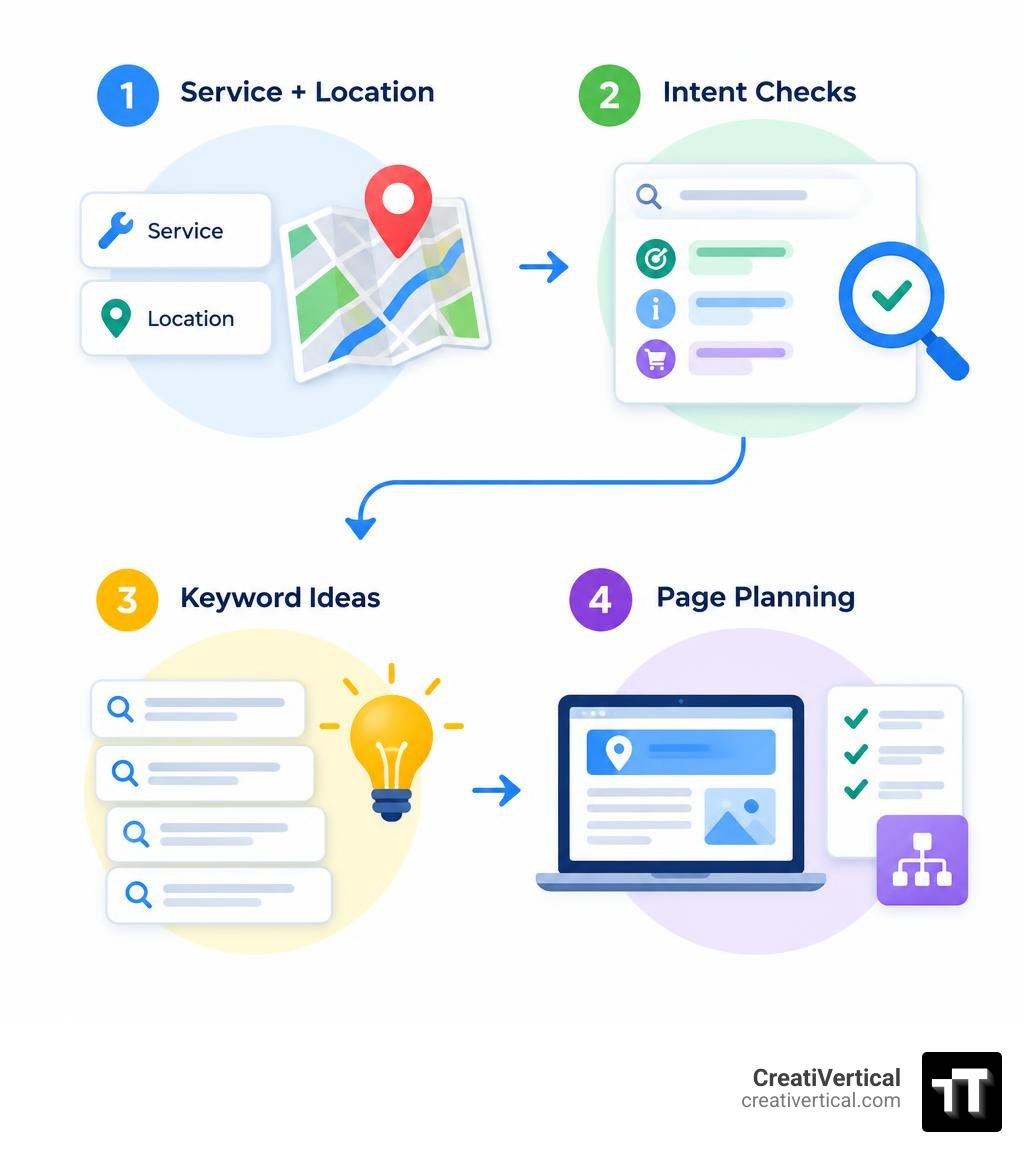
Start with the tool that matches the decision you need to make. Google Keyword Planner can help you find service and city terms. Local Falcon is worth a look if you need local keyword ideas alongside map visibility checks. GBPPromote connects keyword discovery with geo-grid rank tracking. Compare each tool using searches your customers might make, such as a service plus a neighborhood, and check whether its results match your market.
Don’t choose on search volume alone. Look for clear search intent, useful location filters, competitor insights, and a way to export the terms you’ll use on your website or in ads.
I’m Nicholas Cunha, founder of CreatiVertical, with more than 20 years of web and SEO work across Kansas City and the Caribbean. That experience shapes how I assess a local keyword research tool: find relevant searches, check local demand, and turn the strongest ideas into useful pages or campaigns.
Local keyword research tool glossary:
Key Features to Evaluate in a Local Keyword Research Tool
Evaluating software for geographic search discovery requires looking past national volume figures. A dedicated local tool must surface search queries that indicate real proximity and physical intent.

When assessing platforms, look for the following core capabilities:
- Hyperlocal Filtering: The ability to isolate search metrics down to specific cities, suburban areas, and ZIP codes rather than defaulting to broad national averages.
- Geo-Grid Tracking Integration: Modern visibility relies on physical coordinates. Platforms that connect target phrases directly to a coordinate grid help visualize how visibility fluctuates across blocks.
- Search Intent Categorization: Clear classification distinguishing informational queries (how-to content) from transactional queries (“emergency repair near me”).
- Competitor Analysis: Direct visibility into the localized terms your immediate competitors target within specific service boundaries.
- Structured Export Options: Simple CSV, PDF, or JSON exports designed for direct integration into content plans, web architecture, or ad campaign builders.
Understanding structured local keyword research methodology ensures your team targets queries that align with commercial viability rather than vanity volume.
Top Local Keyword Platforms and Evaluation Criteria
Different businesses face distinct operational requirements. A single-location service provider in Lee’s Summit needs simple transactional discovery, while a specialized B2B firm in Kansas City or an offshore corporate services firm requires deep semantic clustering.
| Platform Type | Core Strength | Primary Use Case | Export Formats |
|---|---|---|---|
| Grid-Integrated Explorers | Geo-spatial correlation | Local Pack tracking and local discovery | CSV, Geo-Reports |
| AI Intent Generators | Conversational term expansion | Google AI Overviews and conversational search | CSV, PDF |
| Local-First Consoles | Data privacy and cost control | Agency analysis and high-volume raw querying | CSV, JSON, PDF |
| PPC & SEO Automation Tools | Unified ad and copy builds | Simultaneous search campaigns and landing pages | CSV, Google Ads formats |
Standalone Local Keyword Research Tool Options
Dedicated software platforms focus strictly on unearthing geographic modifiers and search variations. For businesses that want to systematically map nearby opportunities, using a platform like GBPPromote’s Keyword Research Explorer provides access to localized volume, competitive difficulty metrics, and neighborhood variations from a single service seed.
These tools generally evaluate several key metrics:
- Seed Expansion: Generating hundreds of hyper-relevant variations from an initial service term.
- Keyword Difficulty (KD): Calculating competition levels specifically within localized search engine result pages (SERPs).
- Automated Clustering: Grouping terms by common semantic goals so you can assign an entire bucket of phrases to a single landing page.
AI-Powered Local Keyword Generation and Intent Mapping
Artificial intelligence models have shifted keyword discovery from basic string matching to intent analysis. Modern local search behavior often involves natural language queries, voice searches, and AI-assisted summaries. Solutions like Ninja’s local keyword optimizer examine real-world search intent to surface high-converting queries rather than raw volume, while free options like Wiremo’s local keyword generator combine live business profile data with large language models to categorize terms into conversational, problem-solving, and transactional buckets.
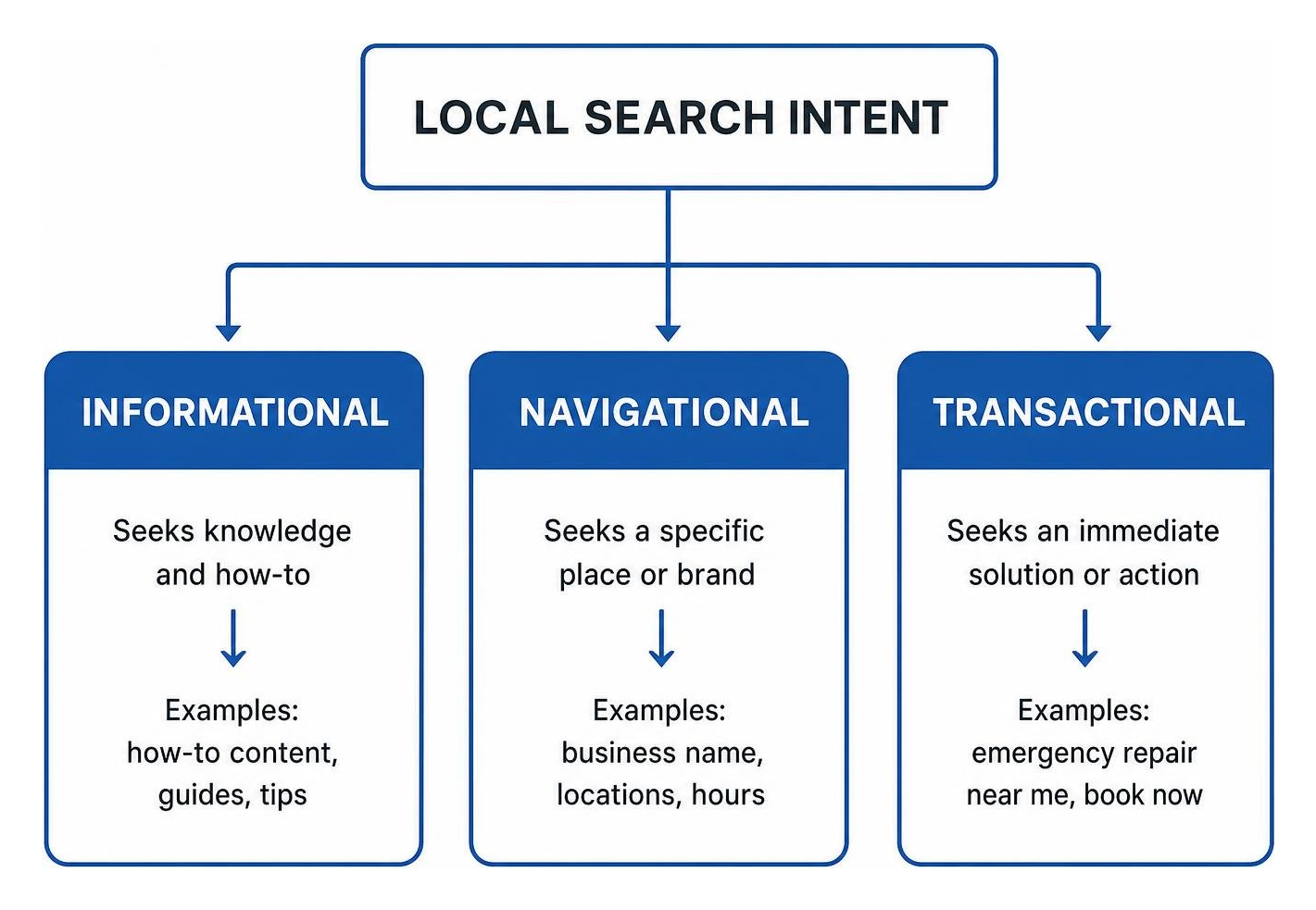
Evaluating search intent ensures your content directly addresses customer problems. If a user searches for an immediate solution in Independence, a transactional page with clear contact options will serve them better than an informational essay.
Local-First and Open-Source Keyword Consoles
For developers, technical analysts, and privacy-focused teams, cloud-only software is not the only option. An open-source keyword console allows teams to run localized queries directly on their own hardware.
Running a dedicated console locally provides several distinct advantages:
- Data Privacy: Your target keyword lists, client audits, and market strategies remain stored on your own drives rather than third-party servers.
- Direct API Efficiency: Connect directly to raw data APIs (such as DataForSEO) without paying recurring SaaS subscription markups.
- Custom Reporting: Build custom filtering logic and export clean JSON or CSV structures directly into your reporting pipelines.
Strategic Implementation Across Search and Paid Channels
Discovering high-intent terms is only the first step. The true value comes from deploying those terms systematically across your digital ecosystem. For teams managing paid and organic strategies simultaneously, platforms like LocalSEOKeywords.io automate the bridge between keyword discovery and campaign architecture, structuring terms for both on-page copy and paid ad groups.
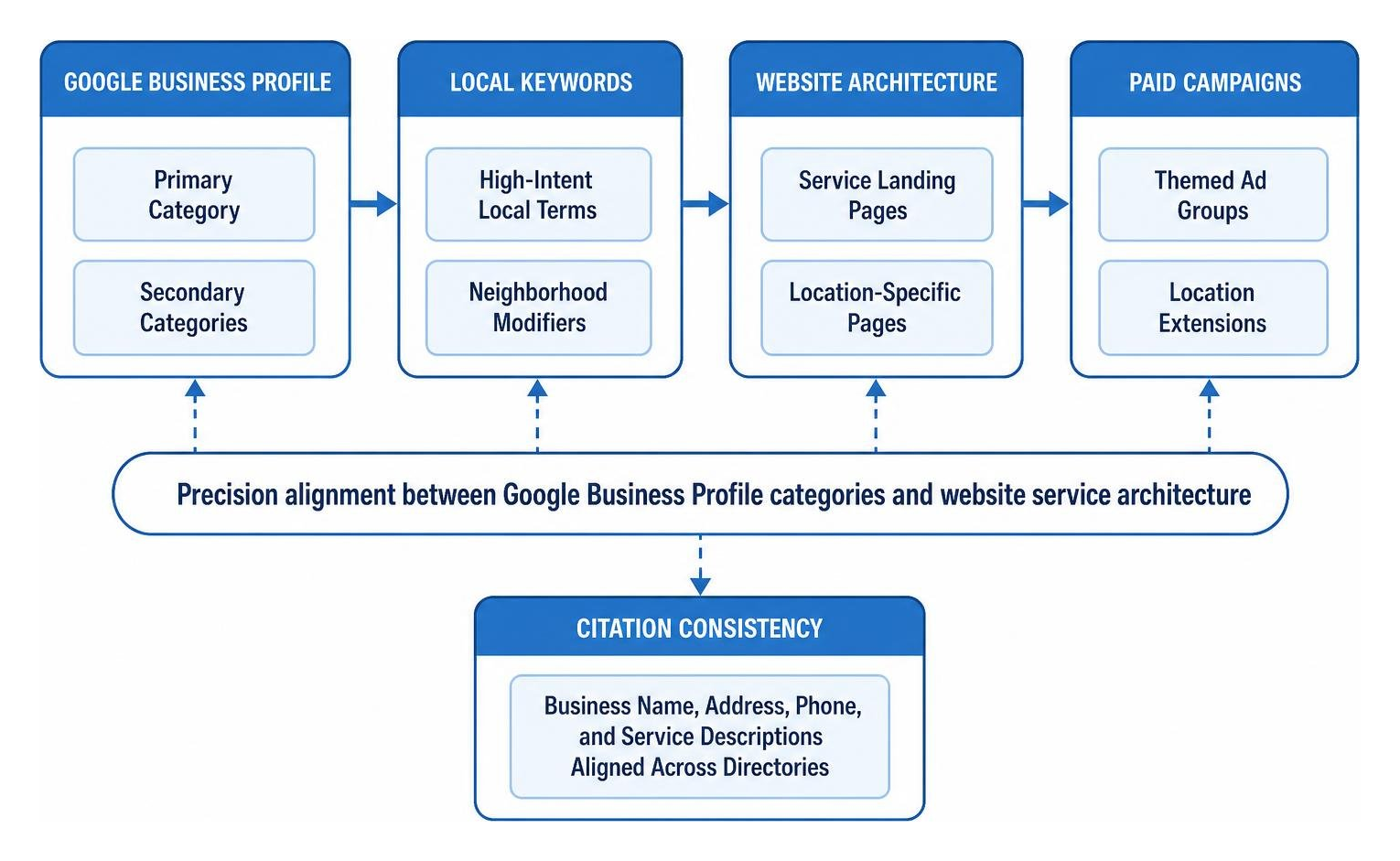
To build a unified local marketing footprint, follow this implementation flow:
- Google Business Profile Alignment: Match your primary and secondary categories directly to your highest-intent localized terms.
- Dedicated Landing Pages: Build localized service pages for key areas like Blue Springs, Grain Valley, or Lake Tapawingo, incorporating neighborhood modifiers naturally into headings and structured data.
- Paid Campaign Structuring: Segment transactional queries into tightly themed ad groups with dedicated location extensions to support Quality Scores.
- Citation Consistency: Ensure business name, address, phone number, and service descriptions align uniformly across local directories and citation platforms.
Selecting the Best Local Keyword Research Tool for Multi-Location Businesses
Managing visibility across multiple physical locations requires software that supports automated segmentation. When choosing a platform for multi-location operations or regional service brands, ensure the software can handle:
- Location-Specific Project Groupings: Isolating keyword databases by city or branch without overlapping metrics.
- Batch Geo-Grid Auditing: Running automated scans across several physical addresses simultaneously.
- Neighborhood and Suburb Support: Identifying localized search nuances between adjacent municipalities rather than relying on one metro-wide dataset.
Integrating Hyperlocal Queries into Local SEO and PPC Campaigns
Coordinating paid search and organic search around the same geographic terms improves overall efficiency. When a high-intent phrase like “precision parts machining Kansas City” or “commercial HVAC repair” is identified, deploy it across both channels:
- Organic Content: Publish technical guides, case summaries, or service outlines addressing the specific regional need.
- Paid Ads (PPC): Set up targeted ad groups with exact-match geo-modifiers, applying negative keywords to filter out irrelevant informational traffic from outside your service area.
Frequently Asked Questions About Local SEO Tools
What is the difference between national and local keyword research?
National keyword research identifies broad search volume across an entire country, often prioritizing high-traffic educational terms. Local keyword research isolates physical search intent, focusing on geographic modifiers (cities, neighborhoods, ZIP codes) and proximity indicators like “near me” that trigger the Google Local Pack.
How do AI Overviews and conversational search impact local keywords?
Search engines increasingly use generative models to synthesize direct answers. Instead of searching strictly for short phrases, users frequently ask full conversational questions. Optimizing for modern search involves incorporating natural problem-solving phrases, clear structured data, and authoritative local citations that AI systems can cite directly.
How often should local keyword data be refreshed?
Quarterly reviews are standard for most industries to account for seasonal demand shifts and local competitor activity. If you launch new service lines or enter new geographic markets, conduct fresh keyword discovery before building new site architecture.
Conclusion
Selecting the right software comes down to clarity. Whether you need a simple tool for localized term discovery, an AI-driven platform to categorize complex search intent, or a private local console for running direct queries, the goal remains the same: identifying the exact language your prospective clients use when they need a solution.
At CreatiVertical, we help businesses build complete, high-performing digital systems—connecting thoughtful web design, technical search engine optimization, AI search visibility, and paid campaigns into an ongoing growth partnership. To explore how your organization can systematically expand its geographic presence, read our guide on how to improve your local visibility online and build a foundation for long-term discovery.