

Strategic Web Design and Redesign: Full Overhaul vs. Targeted Refresh
When evaluating corporate site updates, mid-market leadership teams often wrestle with scope. Should you execute an architectural overhaul or implement a visual refresh? Deciding between the two depends on the health of your existing technical foundation, the scope of your brand positioning changes, and the friction present in your current conversion funnel.
A visual refresh updates stylistic layers without modifying page structure or code foundations. In contrast, an architectural redesign reconfigures information architecture, database relationships, technology stacks, and underlying templates.
| Project Scope Factor | Targeted Website Refresh | Full Architectural Redesign |
|---|---|---|
| Primary Driver | Outdated visual styling or updated brand palettes | Structural conversion blockers, CMS bottlenecks, poor search performance |
| Information Architecture | Unchanged; existing URL hierarchy remains intact | Restructured navigation, consolidated directories, optimized buyer journeys |
| Tech Stack & CMS | Retains existing CMS, database, and backend code | Platform migration or custom CMS re-architecture |
| SEO & Crawl Impact | Minimal risk; metadata updates without URL changes | Critical; requires redirect mapping, schema rebuilds, and index validation |
| Typical Timeline | 2 to 4 weeks | 8 to 24 weeks depending on integrations |

Signs Mid-Market Sites Require Web Design and Redesign Interventions
Websites accumulate technical and structural debt over time. Initial layout choices become constrained as companies expand service lines, release product variations, or enter new regional markets.
Key operational signals indicate when an interface requires an architectural intervention:
- Conversion Plateaus and Pipeline Friction: Traffic increases, but qualified inquiries, demo requests, or custom quote submissions remain stagnant or decline.
- Mobile Interface Breakdowns: A large share of global internet usage occurs on mobile devices. When mobile visitors struggle with cascading navigation, unformatted tables, or complex forms, drop-offs increase.
- Performance Bottlenecks: Legacy page builders inject bloated script libraries, causing slow page loads. Slow mobile pages routinely lose visitors before the first meaningful render completes.
- Compliance and Security Gaps: Outdated software dependencies create maintenance risks and fail modern WCAG accessibility standards.
- Brand and Capability Misalignment: Your corporate offerings have evolved, but the digital experience reflects historical positioning that obscures core capabilities.
For fast diagnostic reviews, emerging tools for AI website redesign can help highlight structural bottlenecks, though corporate platforms require engineering-led executions to resolve deep technical debt.
Evaluating Business Objectives and Tech Stack Longevity
A successful web build must support marketing and operational needs over multiple years. For mid-market B2B organizations, engineering teams should evaluate how the content management system handles API integrations, lead routing, security governance, and modular content authoring.
When choosing between building on platforms like WordPress, Webflow, or headless frameworks, factor in team maintenance costs. A modular component library allows internal marketing teams to construct campaign landing pages without modifying core stylesheet code or creating unintended layout shifts. The right choice also depends on how easily the platform can support comprehensive corporate website development as your digital system matures.
The Audit-First Architecture: Protecting SEO Equity and Search Visibility
The greatest risk during a corporate site overhaul is the unintended loss of established search equity. When a platform changes without an audit-led foundation, search engines encounter missing pages, altered heading hierarchies, and broken internal link paths.
Pre-Redesign Audits: Benchmarking Traffic, Keywords, and Conversion Paths
Before altering a single layout file, run a deep crawl analysis across your active domain. This inventory identifies every published URL alongside its primary organic ranking queries, active backlinks, referral volume, and historical lead attribution.
High-performing URLs must be protected. If a resource drives non-branded organic traffic or holds authoritative backlinks, its topical focus, internal linking structure, and semantic heading hierarchy must carry directly into the new architecture.
Content Migration and Precision 301 Redirect Mapping
Altering URL strings without configuring permanent redirects breaks external backlinks and causes search engines to de-index key assets. A 1-to-1 redirect mapping spreadsheet maps every legacy endpoint to its exact functional equivalent in the new site map.
Teams planning complex migrations must ensure that content migrations include structured JSON-LD schema, updated Open Graph data, and consistent internal link distribution across all service clusters.
After deploying redirects on staging, run automated crawls to verify that no redirect chains or circular redirect loops exist before point-of-launch DNS cutover.
Structuring the Redesign Process for Predictable Execution
Large redesign projects run smoothly when divided into clear, milestone-driven phases. This prevents scope creep, keeps stakeholders aligned, and ensures technical accuracy from discovery through launch.
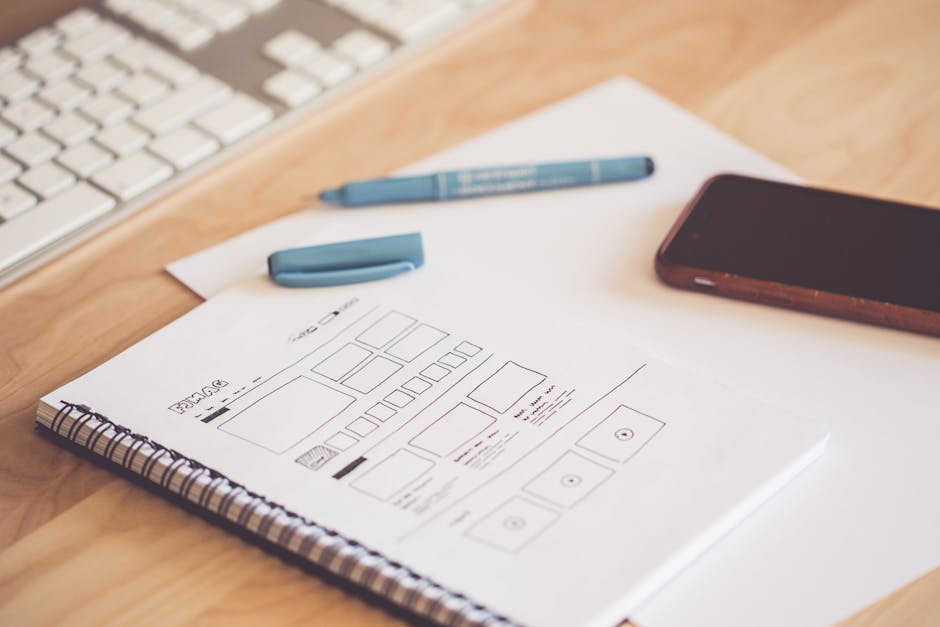
Structuring Web Design and Redesign Phases for Maximum ROI
A structured build follows five consecutive phases:
- Discovery and Technical Audit: Document business goals, buyer journeys, content inventory, and technical constraints before design begins.
- Information Architecture and Content Strategy: Define navigation, page hierarchy, content models, and conversion paths that support lead routing and sales follow-up.
- UI/UX Design and Prototyping: Create wireframes, component libraries, and interactive prototypes to validate layout, hierarchy, and usability.
- Development and QA: Build the approved system in a staging environment, then test performance, accessibility, forms, integrations, and cross-device behavior.
- Phased Deployment and Post-Launch Validation: Migrate content, deploy redirects, monitor crawl health, and measure conversion performance after launch.
Prototypes built in Figma help product teams test interactions, page hierarchy, and information density before code is written. Interactive prototypes are especially useful for validating complex navigation patterns, multi-step forms, and responsive behavior with stakeholders before development begins.
Balancing Visual Polish with UX, Core Web Vitals, and Mobile Usability
Visual polish must never compromise interface performance. The initial moments of a visit establish user impressions, but technical performance dictates whether they stay to read.
- Largest Contentful Paint (LCP): Ensure the primary hero element renders quickly on mobile connections by optimizing asset delivery and modern image formats such as WebP and AVIF.
- Interaction to Next Paint (INP): Minimize main-thread JavaScript execution so pages respond immediately to touch and click inputs.
- Cumulative Layout Shift (CLS): Reserve layout dimensions for all media containers and embedded forms to prevent unexpected page jumps during rendering.
- Accessibility Standards (WCAG 2.2): Ensure color contrast ratios, keyboard navigation paths, and screen-reader labels pass standard accessibility checks across all interactive components.
A disciplined approach to web design and redesign keeps these technical requirements aligned with the visual system rather than treating them as a post-launch cleanup task.
Delivery Models: Agency vs. Freelancer vs. In-House Execution
Choosing the right execution team depends on project complexity, internal bandwidth, and technical integration requirements.
Mid-market organizations undergoing structural platform migrations usually require cross-functional teams spanning UI designers, frontend engineers, backend integration specialists, and technical SEO analysts. In-house teams can work well when the organization already has dedicated engineering and design capacity, but they may struggle to absorb the short-term workload of a full redesign without slowing other product initiatives. Freelancers can support focused tasks such as illustration, copywriting, or component QA, yet they rarely provide the coordinated governance needed for platform migration, redirect mapping, and post-launch monitoring.
For organizations needing rapid visual adjustments on simpler informational templates, fixed-scope providers offer alternative timeline models. Mid-market platforms with custom CRM integrations, complex product catalogs, or rigorous compliance parameters require dedicated architecture and custom engineering. The most predictable outcomes come from a delivery model that pairs strategic oversight with hands-on technical execution across design, development, SEO, and managed infrastructure.
Frequently Asked Questions about Corporate Site Redesigns
How long does an enterprise or mid-market website redesign typically take?
Mid-market website redesigns typically require 8 to 16 weeks from initial discovery to public deployment. Projects involving multi-language localizations, complex enterprise CRM integrations, extensive content migrations, or custom database configurations can extend to 20 to 24 weeks. Scoping accuracy depends on completing an exhaustive technical and content audit before development begins.
How do corporate sites prevent organic ranking loss during a platform migration?
Preserving organic ranking equity requires a complete pre-redesign URL crawl, a 1-to-1 301 redirect map for all updated paths, preservation of core semantic metadata, and maintaining high-value body copy. Post-launch, teams must verify that the robots.txt file permits crawling, sitemaps are submitted via Google Search Console, and server logs are monitored for crawl errors.
What KPIs should mid-market teams measure post-launch?
Track performance across these core metrics:
- Lead Quality and Conversion Velocity: Form submissions, quote requests, and conversion rates across target buyer personas.
- Technical Health: Core Web Vitals performance scores for LCP, INP, and CLS across desktop and mobile devices.
- Search Engine Visibility: Organic keyword distribution, indexation rates, and crawl error logs in Google Search Console.
- Engagement Dynamics: Average time on page, bounce rates on entry pages, and navigation flow progression through core solution clusters.
For teams planning a larger platform migration, a structured web design and redesign engagement can help coordinate these technical and content requirements without losing sight of the buyer journey.
Building Scalable Digital Systems for Long-Term Growth
A corporate website redesign is a long-term investment in your company’s digital infrastructure. When executed with an audit-led strategy, disciplined UI/UX engineering, and technical SEO safeguards, your new site becomes a dependable engine for buyer engagement and lead generation.
At CreatiVertical, we build comprehensive corporate website development systems that combine modern web architecture, search engine visibility, AI search enablement, and managed infrastructure. We partner with growing businesses across the Kansas City region—including Lake Tapawingo, Blue Springs, Lee’s Summit, Independence, and Grain Valley—as well as specialized offshore legal and fiduciary providers, industrial manufacturers, and public-sector technology vendors.
If your current website is limiting your pipeline growth, connect with us on Facebook to discuss your technical requirements and chart a practical path toward modernizing your platform.