

What Is the Platform Engine and Search Architecture?
At its core, Komo AI functions as an intelligent revenue operating layer. Instead of treating market research, contact enrichment, and CRM logging as isolated chores, it links these workflows into an automated engine. Rather than relying on rigid database search filters, users query the platform using natural language — much like briefing a human sales researcher.
When you run a search using AI Search Engine for People & Companies, the system doesn’t just pull pre-formatted records from a static database. It actively scans live web sources to return structured entity profiles with verified citation paths. This live query approach ensures that executive hires, funding rounds, and organizational restructuring events are captured as they happen.
This evolution in data retrieval matches broader shifts across search architectures. To see how generative models are reshaping standard search engine optimizations, explore our overview on the Best AI Tools for SEO 2025.
Core Architecture of Komo AI
The underlying architecture relies on a multi-model intelligence setup, drawing power from enterprise-grade LLMs including Claude and OpenAI models. This framework acts as a living index that processes unstructured web data at the exact moment a query is executed.
By combining internal relationship data—such as calendar histories and email threads—with live web scraping, the platform builds context-aware responses. This real-time web verification prevents the common issue of acting on obsolete contact details or past company initiatives.
Signal-Based Prospecting vs Traditional Lead Databases
Traditional B2B lead databases depend on quarterly data exports. Over time, these static records accumulate dead email addresses, outdated job titles, and missed career transitions.
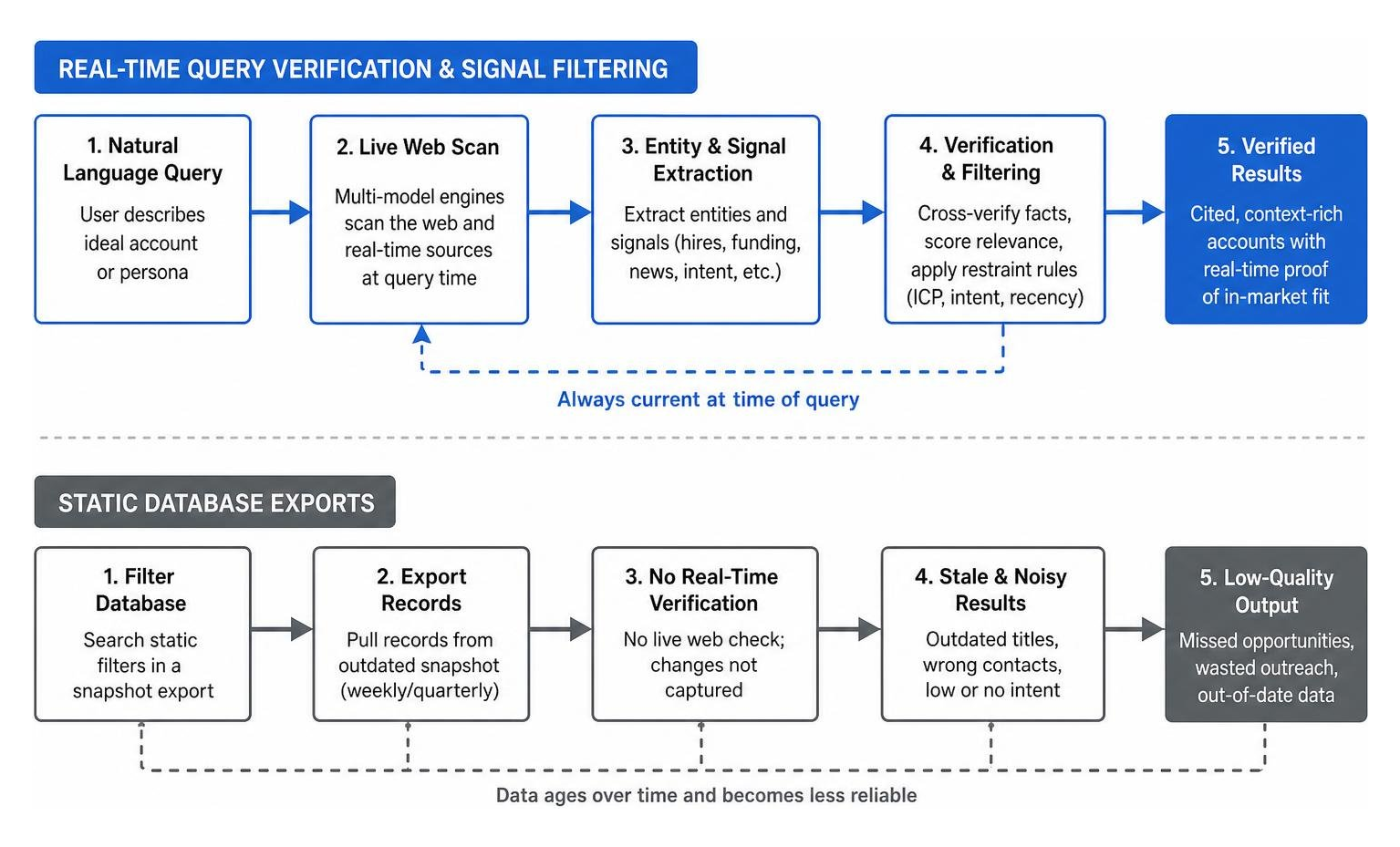
In contrast, Komo AI uses a signal-based approach:
- Timing over volume: The system prioritizes accounts displaying active buying intent over vast lists of cold leads.
- Automated restraint rules: Outbound campaigns automatically exclude accounts that are out of your Ideal Customer Profile (ICP), lack recent intent, or were recently contacted.
- Proof-backed recommendations: Every account surfaced includes cited proof showing why it is currently in-market.
- Focus on pipeline quality: Sales reps focus on high-probability opportunities rather than spending time on low-yield cold outreach.
The Four Pillars: Discover, Research, Prepare, and Close
The platform automates the revenue flywheel across four clear stages. Each stage is designed to replace manual administrative tasks with structured AI agent workflows. To explore how in-market account discovery operates in real time, see Discover — Buyer signals & in-market account discovery.
| Workflow Phase | Traditional Manual Process | Automated Agent Execution |
|---|---|---|
| Discover | Browsing cold static databases and manually applying demographic filters | Automated living index that isolates target accounts showing live intent signals |
| Research | Spending 2–3 hours manually digging through web news, LinkedIn, and SEC filings | 90-second automated agent research generating scored account profiles with source citations |
| Prepare | Writing manual call notes and guessing recent executive priorities | Generating single-page pre-call briefs complete with cited evidence and CRM relationship context |
| Close & Manage | Typing manual post-meeting CRM updates, follow-up emails, and QBR decks | 30-second approval queues for post-meeting CRM write-backs, draft sequences, and QBR slides |
Discover and Research: In-Market Signals and Scoring
The Discover and Research engines screen target accounts through a fit, timing, and connection scoring model. Accounts are ranked based on active triggers rather than arbitrary firmographic metrics.
- Topic engagement: Tracking interactions with relevant industry content, competitor news, and market shifts.
- Executive hiring signals: Flagging when prospective accounts appoint new leadership or scale specific operational departments.
- Competitor activity tracking: Identifying when target accounts actively evaluate or comment on competing solutions.
- Account exclusion rules: Filtering out current clients, active opportunities, and recently contacted accounts to prevent oversaturation.
Prepare and Close: Meeting Briefs and CRM Hygiene
Before a call, the platform synthesizes account signals into concise, cited pre-call briefs. What typically takes a sales rep three hours of manual digging is delivered in ninety seconds.
After a call, the platform shifts to post-meeting execution. It creates a 30-second approval queue for rep verification before updating CRM records, drafting follow-up emails, or building quarterly business review (QBR) slides. While automated tools handle repetitive data entry, human oversight remains vital for nuanced conversations — a point we detail further in our analysis on why Chatbots Are No Replacement for People.
Unlocking Workflows with the Komo AI Model Context Protocol
One of the platform’s key technical capabilities is its native integration with the Model Context Protocol (MCP). MCP establishes an open interface connecting AI platforms directly to real-time software systems and background databases.

Through the Model Context Protocol, the platform exposes over 1,000 sales tools, data sources, and operational skills directly to AI chat interfaces. Sales engineers, AEs, and RevOps managers can trigger account research, run people searches, update CRM records, or compile client proposals without opening a separate browser window. For a deeper look at the core platform architecture, visit Komo — The AI Revenue Engine.
Connecting MCP to Claude, Cursor, and ChatGPT
By pairing MCP with development environments and chat interfaces like Claude, Cursor AI, and ChatGPT, users can run sales actions using plain-text prompts.
- Direct contact lookups: Retrieve verified contact records directly within your active workspace.
- Instant proposal generation: Prompt an AI assistant to write a custom proposal using CRM history and meeting briefs.
- Natural language commands: Update pipeline stages or log notes directly from your terminal or AI editor.
Ecosystem Integrations and CRM Synchronization
The platform fits cleanly into existing sales tech stacks. It provides bi-directional synchronization with CRMs like Salesforce, HubSpot, and Attio, ensuring data hygiene without requiring teams to abandon their primary database.
It also integrates natively with Gmail, Microsoft Outlook, and Google Calendar. By analyzing meeting schedules and email threads, the platform learns team communication styles and maintains complete relationship records. Built-in single sign-on (SSO) through Google and Microsoft simplifies team onboarding and access management.
Target Audiences, Plans, and Data Security Frameworks
The platform is designed for enterprise GTM teams, RevOps managers, Account Executives, Sales Development Representatives, and startup founders.
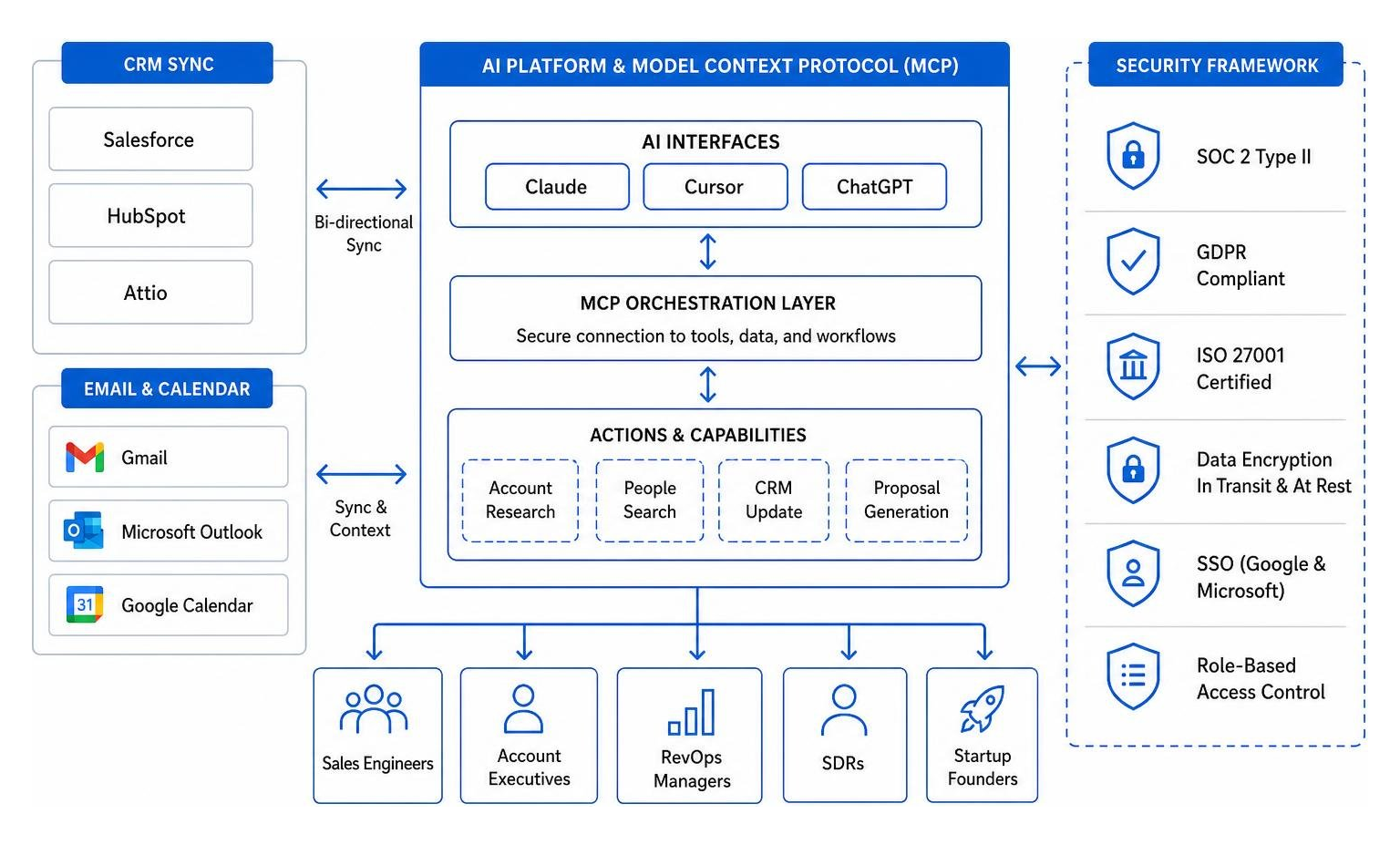
Security frameworks are essential when connecting AI engines to private corporate data and CRM records. If you are evaluating security standards across enterprise AI platforms, read our guide on How to Adopt FedRAMP Compliant AI Services Without Giving Your Security Officer a Panic Attack.
Understanding Komo AI Pricing Plans
Pricing scales based on team size, signal tracking needs, and monthly action credit usage. Discounted rates are available for annual billing commitments.
- Starter Plan: Approximately $99 per month. Includes 20,000 action credits per month and access to 10,000 accounts and contacts. Designed for small teams or individual founders.
- Growth Plan: Approximately $399 per month. Provides 100,000 action credits per month, 50,000 accounts and contacts, and up to 5 active Signal Agents for growing outbound teams.
- Enterprise Plan: Custom enterprise pricing for teams requiring 500,000+ action credits per month, dedicated forward-deployed engineering assistance, custom SLA commitments, and tailored CRM integrations.
- Trial & Discounts: Includes a 7-day free trial requiring no credit card, along with a 16% discount on annual subscriptions.
Trust, Compliance, and Live Data Verification
Handling B2B data securely requires strict compliance frameworks. The platform maintains enterprise-level standards across its infrastructure:
- SOC 2 Type II Certified: Validated for security, availability, and processing integrity.
- ISO 27001 Compliant: Built on standardized information security management systems.
- GDPR & HIPAA-Ready: Ensures data protection compliance for European operations and healthcare-adjacent organizations.
- Evidence Citations: Every generated research summary includes direct source links so reps can verify key statements before speaking with prospects.
Frequently Asked Questions About Revenue Automation
Is This Solution an AI SDR or a CRM Replacement?
No, komo ai is neither a fully autonomous AI SDR nor a replacement for your CRM. It operates as an underlying intelligence layer that links your CRM, email, and live market signals. Rather than sending unsupervised mass cold outreach, it automates research, highlights warm opportunities, and drafts outreach for human review.
How Does Query-Time Sourcing Ensure Data Freshness?
Unlike static lead databases that store quarterly data, this platform conducts query-time web verification. When you search for a person or enterprise, the system scrapes and cross-references active web sources in real time. This process eliminates stale data, dead emails, and outdated job titles.
What Are Agent Actions and How Are Credits Consumed?
Agent actions represent automated background tasks run by the platform. These include enriching a CRM record, compiling a meeting prep brief, scanning an account for buying signals, or running a natural language person query. Action credits are consumed based on the complexity and scope of each task within your plan’s monthly allocation.
Conclusion: Building a High-Velocity Signal Engine

Modern sales teams no longer need massive cold lead lists — they need accurate, real-time context. By focusing on live buyer signals, automated research briefs, and human-in-the-loop workflows, platforms like komo ai help revenue teams reduce administrative drag and focus on closing deals.
At CreatiVertical, we help B2B organizations build and deploy practical AI workflows, custom agents, and visibility strategies that turn technological change into measurable business growth. To learn how to position your brand across modern AI-driven search engines, read our guide on The Ultimate Tools to Keep Your Brand Visible Across AI Search Platforms.
Ready to upgrade your GTM technology and streamline your revenue operations? Reach out to CreatiVertical today to explore custom AI integrations and modern growth solutions for your team.