How AI Search Optimization Tools Are Changing the Way Businesses Get Found
The best AI search optimization tools for 2026 fall into two categories: platforms that help you create, refresh, and optimize content for search engines, and platforms that measure whether AI systems are actually mentioning, citing, or recommending your brand. Here’s a quick reference:
| Tool | Primary Use | Best Fit | Starting Price / Access |
|---|---|---|---|
| Surfer SEO | Content optimization and SERP analysis | Content teams that want structured briefs and page scoring | Around $99/mo |
| Clearscope | Premium content recommendations and AI-era content tracking | Editorial teams prioritizing human-led, high-quality content | Around $189/mo |
| Frase | Content briefs, optimization, and AI visibility tracking | Small teams that want writing workflow plus visibility monitoring | Around $39/mo when billed annually |
| Rankability | Agency-focused content optimization | Agencies that want coaching plus NLP-driven content workflows | Around $166/mo |
| Rankscale.ai | AI visibility, citation, sentiment, and share-of-voice tracking | Brands and agencies measuring presence across ChatGPT, Gemini, Perplexity, and other AI engines | Around $99/mo |
| SE Ranking | SEO platform with AI Overview tracking | Teams that want traditional SEO plus Google AI Overview monitoring | Growth plan level and above |
| AIclicks | AI citation and sentiment monitoring | Teams focused on conversational brand mentions and competitor comparisons | Varies |
| Ansvisor | Open-source / cloud-ready AI visibility tracking | Technical teams that want prompt, citation, and MCP-friendly visibility data | Free self-hosted or paid cloud options |
The right choice depends on whether your biggest gap is content quality, AI citation tracking, AI Overview visibility, or all three.
Search isn’t what it was even two years ago.
When someone searches for a Kansas City contractor, an offshore law firm, or an industrial lubricant supplier, they’re increasingly getting a synthesized answer from ChatGPT, Perplexity, Gemini, Microsoft Copilot, Google’s AI Overviews, or AI Mode — not just a list of blue links. Google now states that the same core SEO fundamentals still matter for AI features, but the way those features summarize and cite sources changes how businesses earn attention.
That shift has real consequences. You can rank #1 on Google and still watch an AI answer hand the recommendation — and the lead — to your competitor.
The challenge is that most SEO teams are still using tools built for the old model: track keywords, check rankings, tweak meta tags. Those things still matter. But they don’t tell you whether ChatGPT mentions your brand, whether Perplexity cites your content, whether Google’s AI Overview includes your page, or whether your content is structured clearly enough for AI systems to extract and recommend it.
That’s exactly the gap that a new generation of AI search optimization tools is trying to fill — some better than others.
I’m Nicholas Cunha, founder of CreatiVertical, and I’ve spent more than two decades doing agency work across web development, SEO, and applied AI — including building and deploying AI agents for real-world client workflows. That gives me a grounded view of how these AI search optimization tools actually perform outside of demo conditions. In the sections below, I’ll break down what is worth your 2026 budget and what to skip.
Traditional SEO vs. Generative Engine Optimization (GEO)
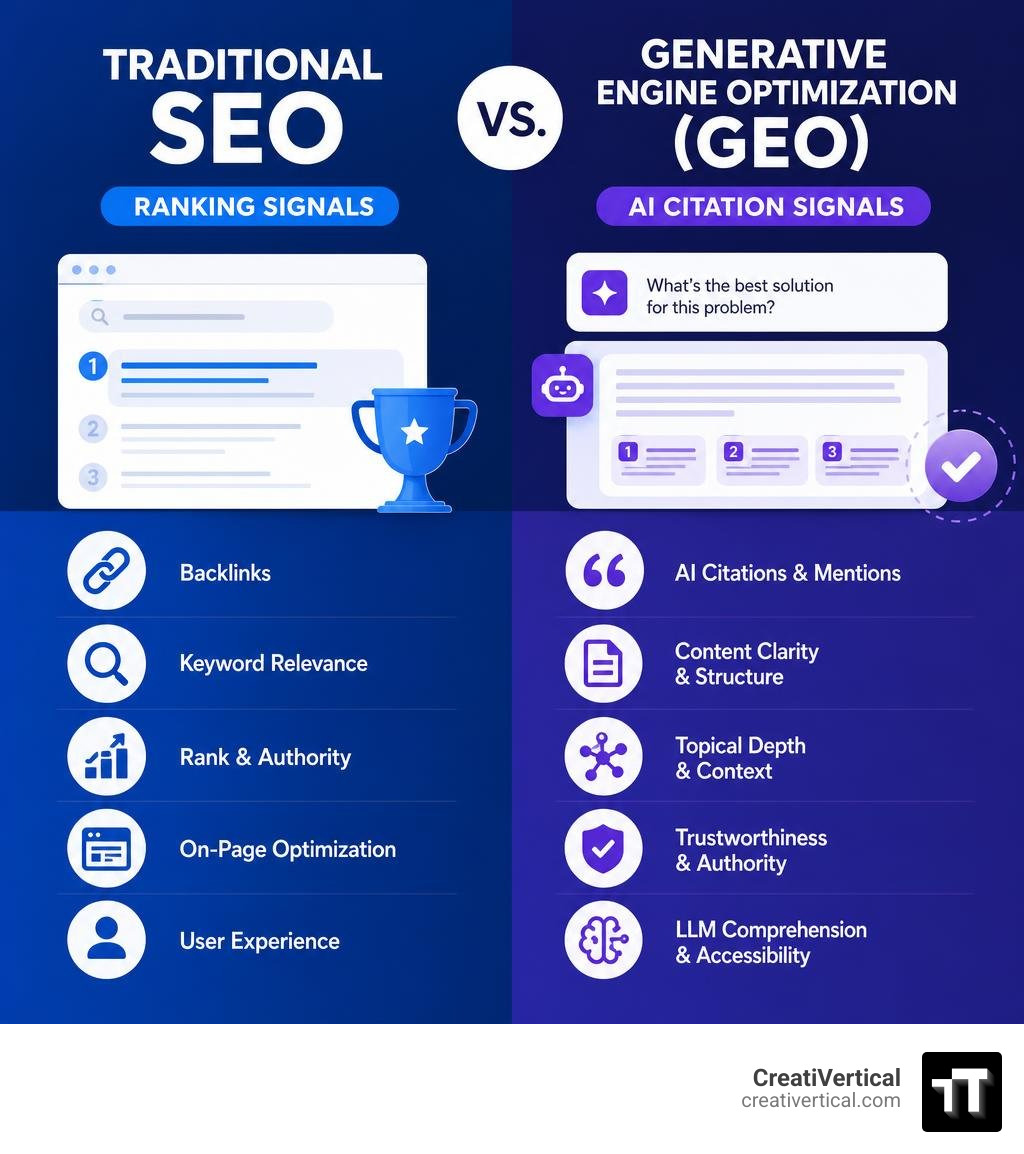
To understand how to optimize your digital footprint in July 2026, you first have to understand how generative engines process information. Traditional SEO is built around search crawlers indexing pages and using algorithms to match search intent with keyword relevance, backlink profiles, technical quality, page experience, and content usefulness.
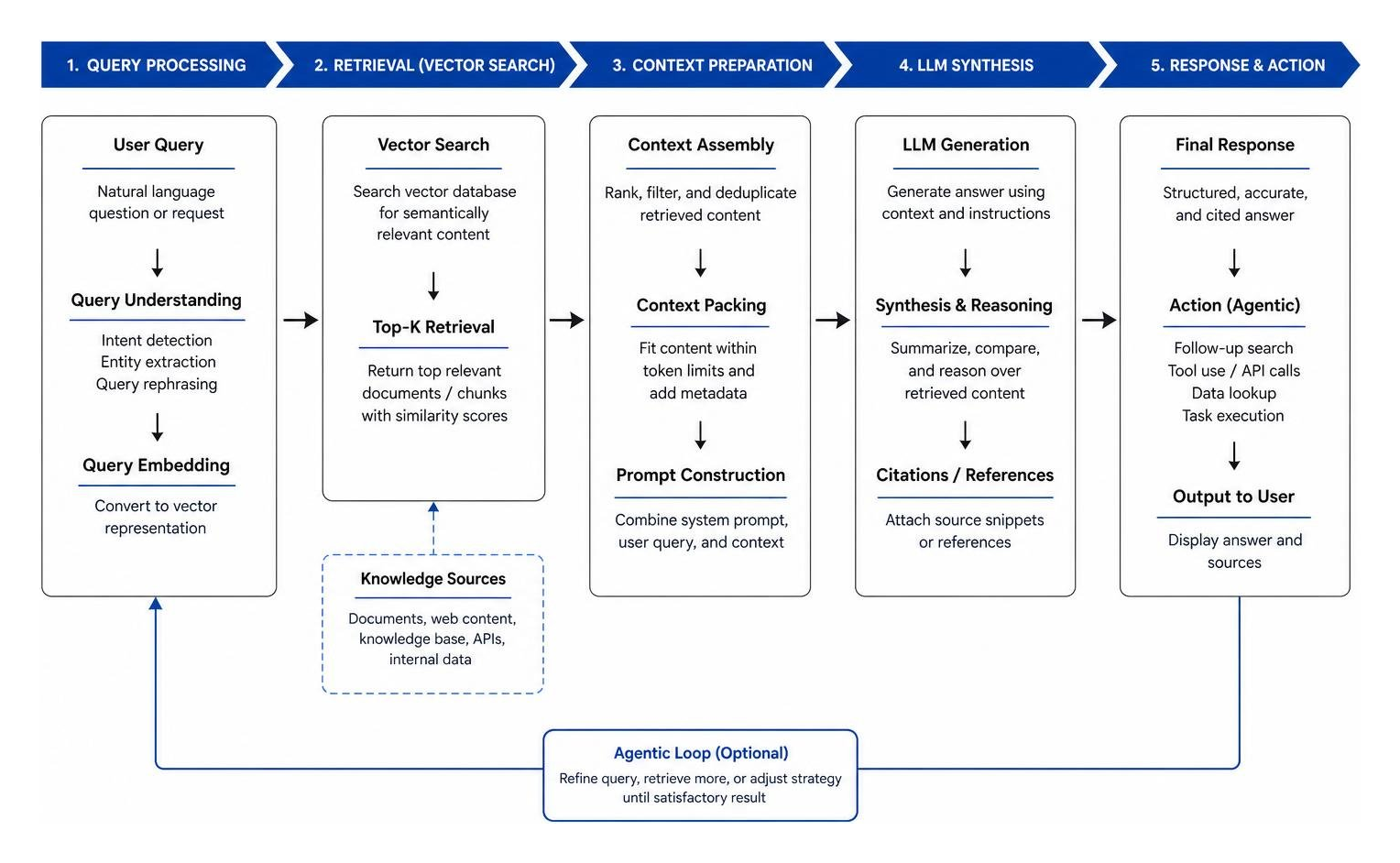
Generative Engine Optimization (GEO), Answer Engine Optimization (AEO), and AI search optimization are different because the user may never see a traditional results page. AI systems use retrieval, query expansion, summarization, and citation selection to assemble an answer. In practice, the system may break a prompt into several related sub-queries, retrieve fragments from multiple sources, compare those fragments, and then synthesize a natural-language response.
That means your content has to do more than rank. It has to be easy for machines to identify, trust, quote, and connect to a real-world entity. Clear authorship, consistent business information, structured headings, factual specificity, schema markup, original examples, and source-worthy explanations all become more important.
For businesses looking to capture this traffic, traditional ranking signals must be combined with entity-based optimization. In places like Kansas City or Lake Tapawingo, Missouri, local businesses have to establish clear, structured signals so that an AI engine can confidently recommend them. This involves maintaining consistent NAP (Name, Address, Phone) data across authoritative directories, using LocalBusiness schema where appropriate, keeping service pages current, and ensuring local citations are clean and verifiable.
Traditional SEO is about getting humans to click your link. GEO is about getting AI agents to trust your brand enough to cite it as a source of truth. If you want a deeper strategy overview, our guide on the Best AI Tools for SEO 2025 explains how these paradigms began to merge.
Top AI Search Optimization Tools for Modern Content Teams
Choosing the right software depends heavily on your team’s size, technical capabilities, reporting needs, and business goals. A solo content creator has vastly different needs than a multi-client digital agency or an in-house enterprise marketing team.

When selecting an AI search optimization tool in 2026, the primary calculation is return on investment (ROI). For agencies, tools that offer multi-client workspaces, automated reporting, prompt tracking, and predictable subscriptions are essential. Solo creators usually need a tighter loop between keyword research, content drafting, optimization scoring, and post-publication monitoring without paying for heavy-duty tracking APIs.
Content-Focused AI Search Optimization Tools
These platforms are designed to help you write content that can rank on traditional search engines while matching the semantic depth and clarity that generative search systems tend to reward.
1. Clearscope
Clearscope remains one of the strongest premium content optimization platforms, though its pricing makes it a heavier lift for solo creators. It excels at analyzing competitive search results and providing highly accurate NLP keyword recommendations. Its positioning has also shifted with the market: in 2026, the best use case is not just “write an SEO article,” but maintain content quality and track whether authoritative pages are still visible in AI-shaped search experiences.
2. Surfer SEO
Surfer SEO is still one of the most popular optimization suites for structured briefs, SERP analysis, keyword research, and live content scoring. It is a strong fit for teams that want a data-driven approach to content gaps and on-page improvements. The caution is that Surfer works best when a human editor adds original insight, examples, and credibility; chasing a content score alone will not make a page citation-worthy in AI answers.
3. Frase
Frase has evolved from a content brief tool into a broader content and AI visibility workflow. Its AI Visibility feature lets teams add prompts, compare competitors, and monitor brand presence across AI search platforms. That makes Frase especially useful for small and mid-sized teams that want content optimization and visibility monitoring without buying a separate enterprise GEO stack.
4. Rankability
Rankability is built specifically with agencies in mind. It combines content optimization workflows, NLP-driven recommendations, and education/coaching support. For teams scaling content production across multiple clients, the real value is not just scoring a page; it is creating a repeatable editorial process that junior writers, strategists, and account managers can all follow.
Visibility-Tracking AI Search Optimization Tools
Unlike content editors, visibility-tracking tools are designed to show you how your brand is represented in AI-generated answers across platforms like ChatGPT, Gemini, Claude, Perplexity, Copilot, Grok, and Google’s AI Overviews.
1. Rankscale.ai
Rankscale.ai is a dedicated AI visibility platform for measuring brand mentions, citations, sentiment, position, and share of voice across generative engines. It is a strong fit for agencies and brands that need to prove whether GEO work is increasing real AI-answer presence, not just improving traditional keyword rankings.
2. AIclicks
AIclicks is a specialized monitoring tool designed to track brand citations and sentiment across multiple LLMs. It is particularly useful for conversational queries such as “What is the most secure offshore law firm for asset protection?” or “Which Kansas City web design agency also handles AI search visibility?” The value is in seeing which competitors appear when a buyer asks an AI assistant for a recommendation.
3. SE Ranking (AI Overview Tracker)
SE Ranking remains useful for teams that want traditional SEO rank tracking and Google AI Overview monitoring in one platform. Its AI Overview tracking is most relevant for organizations already using SE Ranking for keyword tracking, competitor monitoring, and SEO reporting.
4. Ansvisor
Ansvisor is an open-source and cloud-ready AI visibility platform built for prompt tracking, citations, brand mentions, sentiment, competitor comparisons, and AI traffic analytics. For technical teams, developers, or agencies that want more control over visibility data, its self-hostable model and MCP-friendly positioning make it one of the more interesting 2026 options.
| Feature / Capability | Content Optimization Tools (e.g., Clearscope, Surfer, Frase) | Visibility Tracking Tools (e.g., Rankscale, Ansvisor, AIclicks) |
|---|---|---|
| Primary Goal | Improve page quality, topical depth, structure, and on-page SEO | Track brand presence in AI-generated answers |
| Workflow Location | Pre-publishing and content refresh | Post-publishing monitoring and GEO reporting |
| Analysis Method | SERP, NLP, content scoring, briefs, and optimization recommendations | Prompt testing, citation extraction, mention tracking, sentiment, and share of voice |
| Best Metrics | Content score, topic coverage, readability, internal links, optimization gaps | Citation rate, AI visibility score, sentiment, platform coverage, competitor share of voice |
| Best For | Writers, editors, strategists, and content managers | SEO managers, PR teams, agency directors, and technical GEO teams |
Key Features and Workflow Integrations to Prioritize
When you are evaluating AI search optimization tools for your business, look past the marketing hype and focus on how a tool fits into your daily operations. A tool that forces your writers to copy-paste back and forth between five different browser tabs will eventually be abandoned.
We recommend looking for five core capabilities in 2026:
- Real-time NLP scoring: Your writers should have immediate feedback on content depth, semantic keyword usage, and structural readability while they write.
- AI visibility tracking: The tool should show whether your brand appears in AI answers, which prompts trigger mentions, which sources get cited, and which competitors are winning recommendations.
- Brand voice customization: AI-generated drafts are notoriously bland without proper guardrails. The best platforms let you upload style guides, past content, and brand guidelines so output sounds human and on-brand.
- Entity and citation clarity: Strong GEO workflows help you reinforce the brand, author, service area, product category, and proof points that AI systems need to understand.
- Seamless CMS and reporting integrations: Look for tools that integrate with WordPress, Google Search Console, Google Docs, Webflow, Looker Studio, Slack, or your enterprise CMS.
To see how these technologies fit into a broader business context, explore our deep dive into the Category: AI archive.
For organizations managing customer relations, understanding how AI parses sentiment is crucial; you can read about AI in Online Review Management to see how reviews feed into LLM recommendations.
Furthermore, if you are in specialized markets, check out our insights on the AI Concierge for Financial Legal Services or read our practical Tips to Modernize Hospitality Marketing with AI to see how vertical-specific data is utilized by search agents.
Technical Integration and Emerging Trends
The technical landscape of search is moving rapidly toward agentic workflows. Leading platforms are no longer just connecting to basic keyword databases; they are integrating with Ahrefs, Semrush, Google Search Console, analytics platforms, and AI visibility datasets to pull live performance data.
One of the major technical discussions in the SEO community is the use of llms.txt files. Treat llms.txt as an experimental discovery aid, not a replacement for technical SEO. Google says its AI features rely on the same foundational SEO best practices used for Search overall, including crawlability, indexability, useful content, and compliance with Search policies. Some independent AI crawlers and browser agents may use llms.txt to parse website context, but it should support — not replace — robots.txt, XML sitemaps, schema markup, internal linking, and clean HTML structure.
Under the hood, advanced search optimization increasingly relies on vector databases, custom retrieval pipelines, and model evaluation loops. The practical takeaway for marketers is simple: pages that are specific, well-structured, internally linked, and easy to verify are more likely to be useful to both search engines and AI answer systems.
Frequently Asked Questions About AI Search Optimization
How accurate are AI SEO tools in tracking brand visibility?
Tracking brand visibility across generative engines is inherently more complex than tracking traditional keyword rankings. In traditional search, a keyword query returns a relatively stable list of URLs. In generative search, answers can vary based on prompt wording, location, personalization, model version, retrieval method, and sampling behavior.
The best AI visibility tools are useful because they create repeatable measurement systems: fixed prompts, competitor sets, platform coverage, citation extraction, sentiment analysis, and trend reporting. They should not be treated as perfect mirrors of every consumer’s live ChatGPT or Gemini experience. Use them as directional intelligence: Are we being mentioned more often? Are citations improving? Which competitors are winning? Which prompts expose content gaps?
Do AI search engines completely replace traditional Google SEO?
No. Generative search engines do not operate in a vacuum; they rely heavily on crawlable, authoritative, well-structured information. Google’s own guidance for AI features says foundational SEO best practices remain relevant: make content crawlable, follow Search policies, and focus on helpful, reliable, people-first content.
If your website has broken technical structures, poor mobile performance, thin content, inconsistent entity signals, or lacks authoritative backlinks, AI systems will struggle to find and trust your content. Traditional SEO remains the foundation. GEO is the layer you build on top of that foundation to ensure that once search engines and AI systems encounter your site, they can easily extract your brand as a credible recommendation.
How do AI tools handle content creation and brand voice?
AI writing tools have become highly sophisticated, but they are not a replacement for human expertise. If you rely entirely on automated, one-click AI article generators, you will likely produce commodity content — generic summaries of existing web pages that fail to demonstrate real experience, expertise, authoritativeness, or trustworthiness (E-E-A-T).
The best approach is a human-in-the-loop workflow. Use AI tools to handle heavy lifting like competitor structure analysis, initial content briefs, semantic keyword optimization, and refresh recommendations. However, always have a human editor inject unique viewpoints, original data, brand voice, local context, and real-world examples. If you want to explore the human dynamics of working with advanced language models, read our articles on A Thought Experiment When GPT-4 Acquires an Attitude, the Rising Demand for Prompt Engineers, and why Chatbots Are No Replacement for People.
Conclusion
The search landscape is changing, but the goal remains exactly the same: getting your business in front of the people who need your services. Whether you are a local business in Kansas City, an offshore law firm in the Caribbean, or an industrial B2B manufacturer, relying solely on traditional blue-link SEO is no longer enough to stay competitive in 2026.
At CreatiVertical, we don’t treat SEO as a checklist of keywords. We build complete, performance-focused digital systems that integrate professional web design, traditional search engine optimization, AI search visibility, and practical automation. We help your brand build the technical structure, authoritative content, and clean entity signals required to get cited by ChatGPT, Perplexity, Gemini, Copilot, and Google AI Overviews.
If you are ready to stop watching AI hand your leads to your competitors, let’s build a search strategy that works for the modern web. Launch your AI search strategy with us today.